Daocheng White Pagoda in Daocheng County, Garze
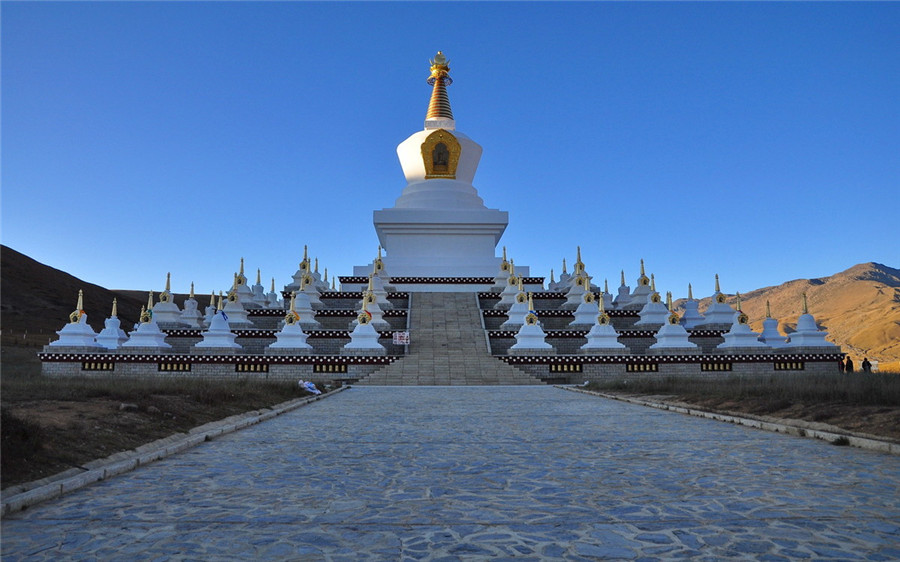
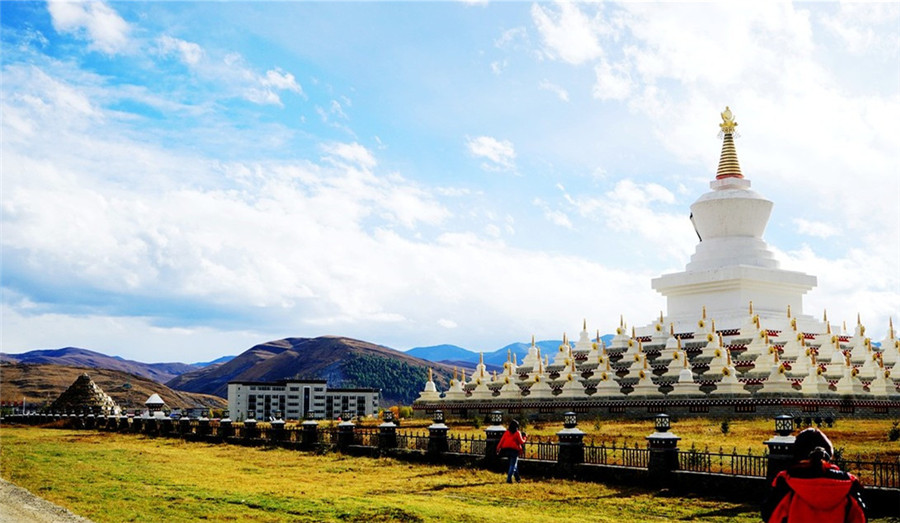
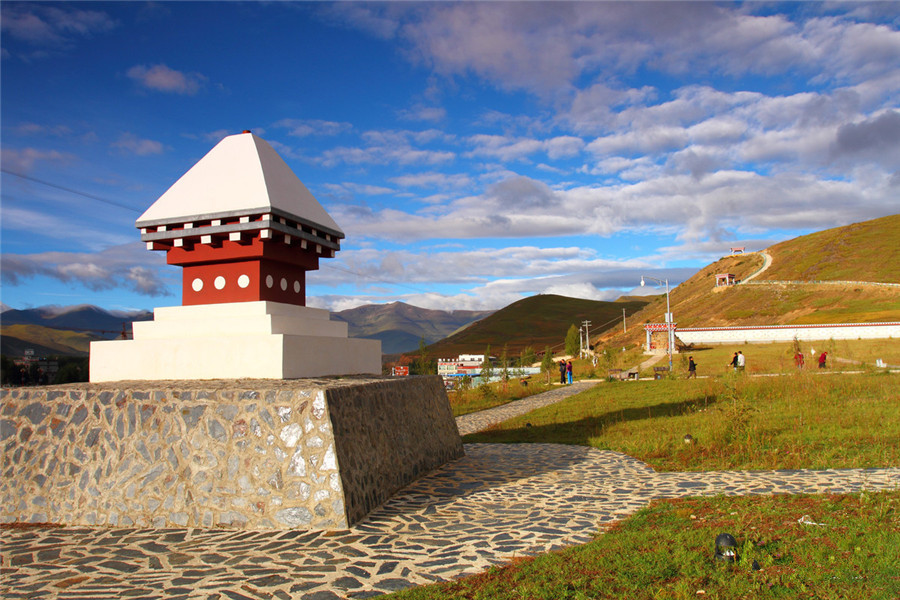
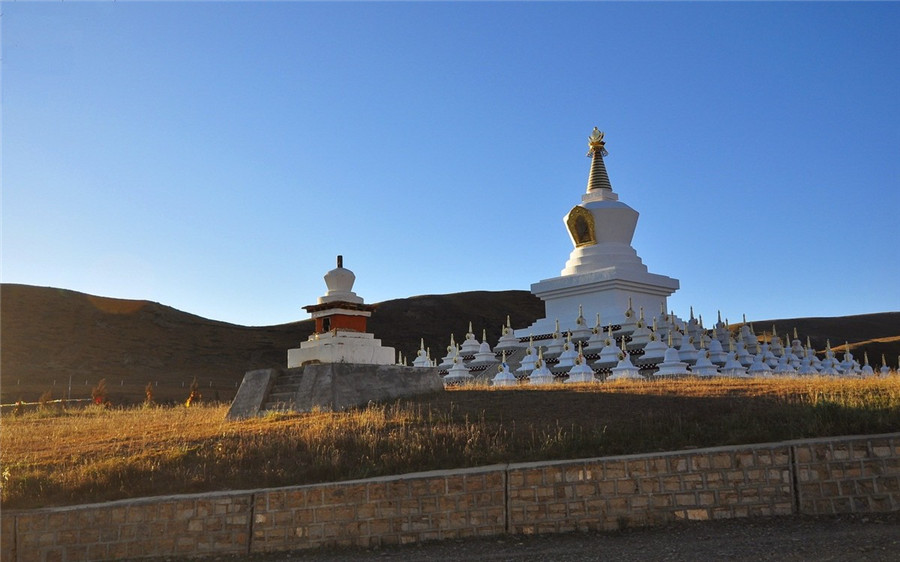
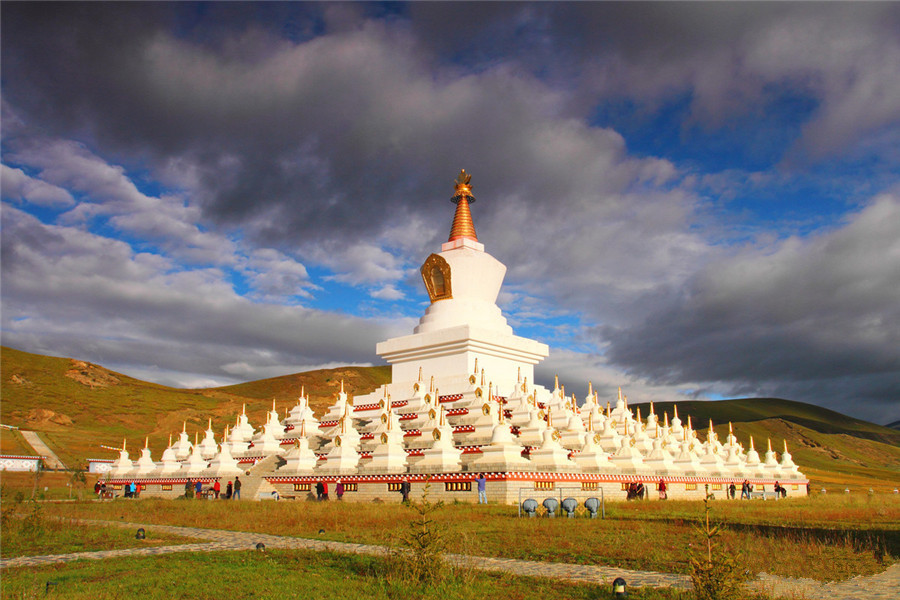
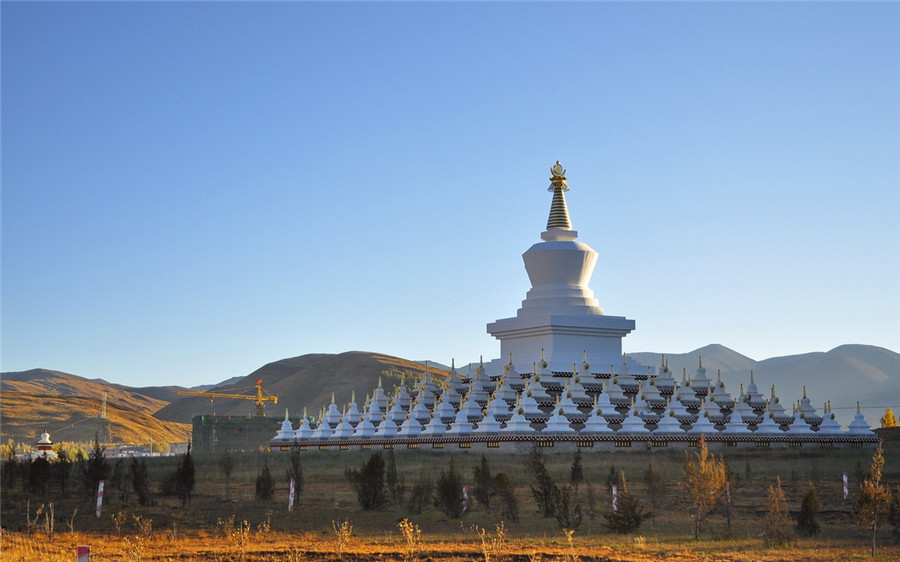
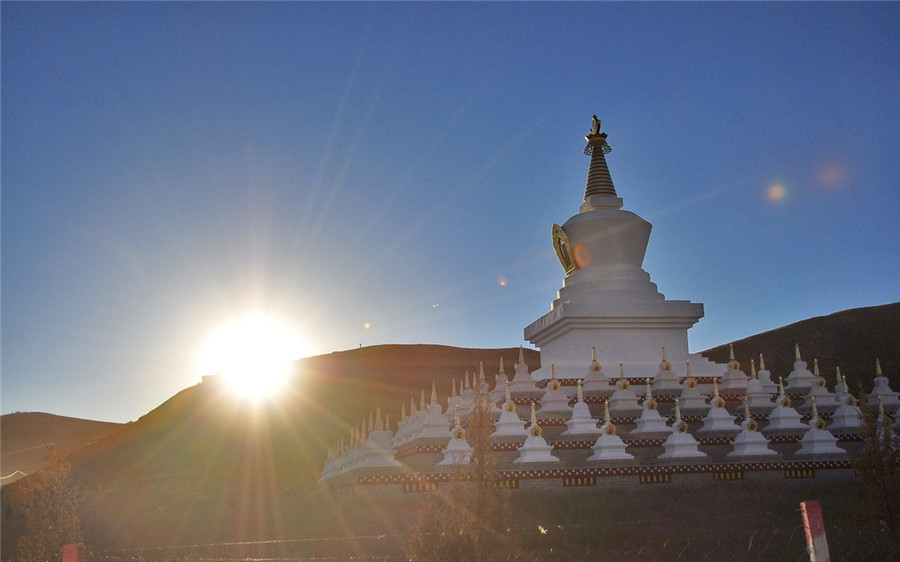
Daocheng White Pagoda (稻城白塔), also known as the Victory Pagoda (胜利塔) or Zunsheng Tower Forest (尊胜塔林), is a significant Tibetan Buddhist monument located in Daocheng County (稻城县), Garze Tibetan Autonomous Prefecture (甘孜藏族自治州), Sichuan Province (四川省). The pagoda is situated near the Daocheng Bridge (稻城大桥), at an altitude of approximately 3,740 meters above sea level, and serves as the largest white pagoda theme park in the Kangnan region (康南地区).
This architectural marvel is not only a key cultural site for Tibetan Buddhism but also a stunning visual landmark, attracting visitors for both spiritual reflection and scenic photography. It is open year-round and free to visit, offering a breathtaking experience, especially when illuminated at night.
Architectural Features and Religious Significance
Structure and Design
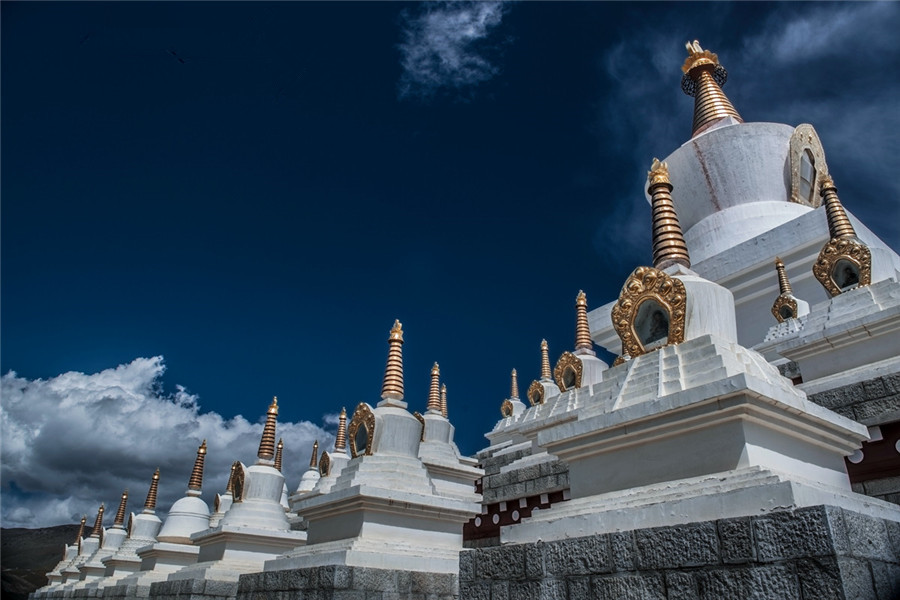
The Daocheng White Pagoda is composed of a 37-meter-tall main pagoda surrounded by 107 smaller pagodas, each approximately 4 meters high. The main pagoda’s base is modeled after the Temple of Heaven (天坛祈年殿) in Beijing, and it features 512 brass prayer wheels (转经筒) and intricate stone animal carvings. The pagoda’s three-tiered structure symbolizes Buddhist perfection and sanctity.
The pagoda’s unique design merges Tibetan and Han Chinese architectural styles. The base of the main pagoda is surrounded by brass prayer wheels, allowing Tibetan pilgrims to complete their daily religious rituals. Devotees traditionally walk three clockwise circles around the pagoda to seek blessings.
Cultural and Religious Activities
In Tibetan tradition, the act of walking around the pagoda and spinning the prayer wheels is seen as an essential part of spiritual practice. Each rotation of the prayer wheel is believed to bring blessings and accumulate merit. The pagoda complex also features a Tibetan Buddhist temple, with a Buddha statue enshrined in the “Immaculate and Pure Hall” (无垢清净殿), showcasing a 2.1-meter-high wooden sculpture of Shakyamuni Buddha.
Visiting Information
Opening Hours
The Daocheng White Pagoda is open 24 hours a day, allowing visitors to experience its beauty at different times. It is particularly stunning in the early morning, when the pagoda is shrouded in mist, or during the golden hour before sunset when the light bathes the monument in a warm glow.
Admission and Transportation
-
Admission: Free entry
-
How to Get There: The pagoda is easily accessible by car from Daocheng Town (稻城县城), a 10-minute taxi ride. Visitors can also drive along G227 or National Highway 318 (318国道).
Nearby Attractions
The Daocheng White Pagoda is conveniently located near other notable attractions, including Hongcaozi (红草地) and the Daocheng Yading Scenic Area (稻城亚丁景区), both of which can be visited on the same trip.
Cultural Etiquette and Travel Tips
Etiquette Guidelines
-
Clockwise Circumambulation: When visiting the pagoda, it is important to walk in the clockwise direction as a sign of respect for the local Tibetan customs.
-
Respect Local Traditions: Always show respect for the sacredness of the site and follow local cultural norms. Do not disturb the prayer rituals or litter the area.
Altitude and Health Considerations
Given the high altitude of approximately 3,740 meters, it is advisable to take things slowly, especially if you are not accustomed to the altitude. Bringing an oxygen bottle is recommended for those who may experience altitude sickness (高原反应).
Significance of the White Pagoda
Symbolism of the Pagoda
The Daocheng White Pagoda is not only a visual masterpiece but also a spiritual beacon in the region. It serves as an important pilgrimage site for Tibetan Buddhists, who perform daily rituals of circumambulation and prayer wheel spinning. The pagoda is an embodiment of peace, hope, and the connection between nature and spirituality.
The surrounding 119 smaller pagodas represent the villages of Daocheng County, creating a powerful symbolic link between community, faith, and the land. The white color of the pagodas signifies purity, and their towering presence offers a sense of calm, serenity, and reverence.
Cultural and Religious Fusion
The integration of Han Chinese architectural elements with Tibetan Buddhist symbolism reflects the harmonious coexistence of the two cultures in the region. This fusion is evident in the pagoda’s base design (inspired by the Temple of Heaven) and the presence of Chinese-style Buddhist halls surrounding the central structure.
Honors and Recognition
-
2019: The Daocheng White Pagoda was recognized as one of the most significant Tibetan Buddhist landmarks in the Kangnan region.
-
2020: It became one of the top spiritual sites in Garze Prefecture for its cultural and religious importance.