Gongburi Holy Mountain in Nedong District, Shannan
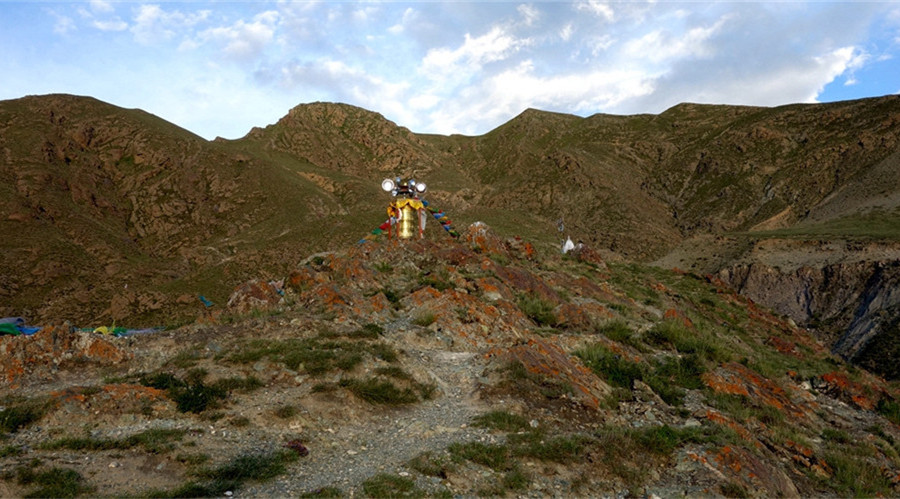
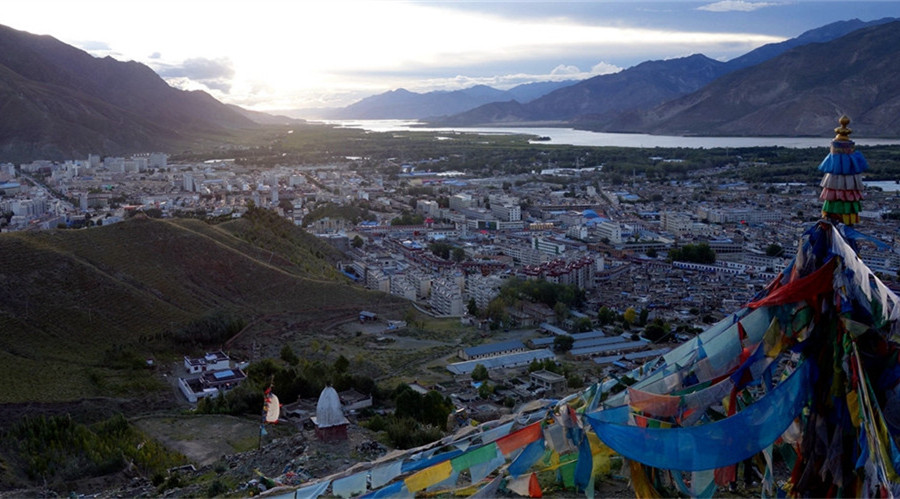
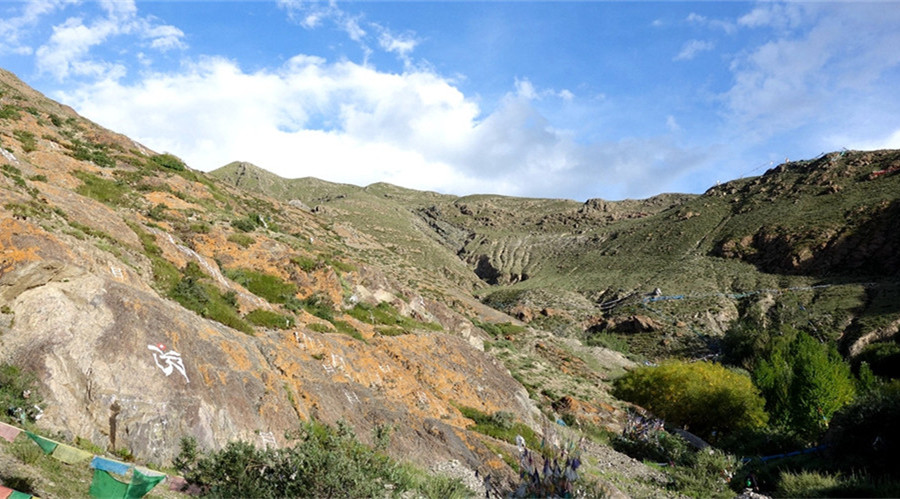
Gongburi Holy Mountain (贡布日神山), located on the southern side of the Yarlung Tsangpo River (雅鲁藏布江), near Zedang (泽当), is one of the most revered sacred mountains in Tibet. The mountain is composed of three peaks: Yangga Wuzi (央嘎乌孜), Senmu Wuzi (森木乌孜), and Zhukang Zi (竹康孜), which are interconnected by caves. This holy mountain is renowned not for being the home of a mountain god, but for its mysterious ability to foresee the future, where one can gain insight into everything on this sacred ground.
Legend and Sacred Importance
According to local legends, the mountain is supported by four deities: Mawang (马王) to the east, Shenxiang (神像) to the west, Kongque (孔雀) to the north, and Linggui (灵龟) to the south. These four gods are said to hold the mountain suspended in the air, leaving it far closer to the heavens than to the earth. Therefore, only those with sincere hearts and good fortune can ascend the mountain to witness its sacred landscape and gain knowledge of their life’s fate.
The legendary tale of the monkey king and the Rakshasa woman (罗刹女) is said to have taken place on this mountain. They were transformed into human form under the guidance of Bodhisattva Puxian (菩贤菩萨) on Senmu Wuzi and Yangga Wuzi, while Zhukang Zi was the place where the Bodhisattva practiced. According to the myth, the monkey king and the Rakshasa woman were married under the Bodhisattva’s blessing.
Zedang: The “Playground of Monkeys”
The area at the foot of the mountain is said to be a playground for monkeys, and thus the name Zedang (泽当), meaning “the playground” in Tibetan, was given to this region. The surrounding area is also dotted with numerous temples, adding to the spiritual significance of the location.
Geographical Environment
Gongburi Holy Mountain is situated in Shannan (山南) City, in the middle reaches of the Yarlung Tsangpo River valley. This region enjoys a temperate semi-arid plateau monsoon climate, characterized by long winters and no extreme heat during spring and autumn. The average annual temperature is between 5-8°C, with the coldest month having an average temperature between 2-12°C and the warmest month ranging from 10-18°C. This makes Shannan one of the more temperate areas in the Tibetan Plateau. The region is also known for its frequent night rains, particularly during the monsoon season from June to September, when the chance of rain at night can exceed 70%.
Mountain Height and Monkey Cave
The highest peak of Gongburi Holy Mountain reaches an elevation of 4,472 meters. At an altitude of 4,060 meters, there is the famous Monkey Cave, a natural rock cave that is 2.5 meters high and 6.95 meters wide, with a depth of 15 meters. Inside the cave, visitors can find various ancient murals, including depictions of the legendary monkey turning into a man. These murals are highly revered by pilgrims and visitors alike.
Archaeological Evidence
Archaeological finds in the surrounding areas, such as stone axes and pottery shards from the Neolithic era, provide evidence of the early presence of human civilization in the region. These discoveries reinforce the belief that the Shannan area is the birthplace of Tibetan civilization.
Local Customs and Culture
Tibetan Opera and Religious Significance
Tibetan opera is closely linked to religious myths and legends. The two main schools of Tibetan opera are the White Mask and Blue Mask styles. The famous Ba Drama Troupe in Qiongjie (琼结) represents the White Mask tradition, while the Troupes in Angren (昂仁) and Lhasa represent the Blue Mask tradition. These operas are based on Tibetan religious texts and the Epic of King Gesar (格萨尔王传), and their vibrant performances are filled with symbolic masks. The masks’ colors represent different figures: red symbolizes kings, green for queens, yellow for Lamas and gods, and black and white for traitors and witches.
Religious Pilgrimages and Mountaineering
Every year, on the 15th day of the 4th month in the Tibetan lunar calendar, a large number of Tibetan pilgrims gather at the base of Gongburi Holy Mountain for a kora (绕山), a sacred circumambulation of the mountain. It is believed that by walking around the mountain, one can eliminate misfortune and gain blessings. This pilgrimage is a vital part of Tibetan religious culture, and it reaches its peak on the aforementioned date, when thousands of pilgrims gather to walk the sacred path.
Myths and Stories: The Monkey Legend
One of the most famous legends associated with Gongburi Holy Mountain is the story of the monkey king and the Rakshasa woman, which is deeply woven into the fabric of Tibetan myth. The legend tells of how the monkey king and the Rakshasa woman were blessed by Bodhisattva Puxian on Zhukang Zi, and how they became human and gave birth to six monkey children. Over time, as the monkey population grew, they faced famine, and their survival depended on Bodhisattva Puxian, who provided them with seeds to grow crops in the nearby Sodang (索当) area. This story is a vivid example of the merging of myth and early agricultural practices that led to the evolution of human-like ancestors in Tibet.
Sacred Pilgrimage and Mountain’s Mystical Powers
For the Tibetan people, Gongburi Holy Mountain is not only a geographical landmark but a place of profound spiritual significance. The mountain is considered the mother of Tibetan civilization, nurturing the early Tibetan people. Those who climb the mountain with pure hearts and good fortune are said to have visions of mystical landscapes and can glimpse their future. The mountain’s mysterious qualities continue to captivate locals and visitors alike.
Tourism Services
Dining and Local Cuisine
The cuisine in Shannan is similar to the rest of Tibet, with a heavy influence of Sichuan cuisine, thanks to the many Sichuan immigrants who have opened restaurants in the region. Dishes are affordable, with most meals costing 15-20 RMB.
Accommodation
There are a range of accommodations in Zedang (泽当) and other towns such as Qushui (曲水), Qiongjie (琼结), and Gongga (贡嘎). Visitors can find small guesthouses as well as more comfortable hotels, with prices for basic accommodations starting around 25 RMB.
Transportation
Zedang, Qushui, Qiongjie, and Gongga are important stopovers for tourists traveling through Shannan. The Qushui Bridge is a key point in the Yarlung Tsangpo River valley and serves as an entry point to the mountain regions.
Recreation and Shopping
Shannan is rich in cultural heritage, and visitors can enjoy the lively Tibetan music and dance performances, which are a staple at cultural exchange events. Local products like Tibetan incense from Minzhu Lin Monastery (敏珠林寺) and walnuts from Jiacha (加查) are popular souvenirs to bring home.
Travel Tips
-
Best Time to Visit: The best months to visit Shannan are between April and October when the weather is relatively mild and accessible for travel.
-
Altitude: Shannan is located at a high altitude (around 3,600 meters), so it is advisable to take precautions for altitude sickness.
-
Weather: The region experiences strong winds and dust storms, particularly during the spring and autumn evenings, so travelers should come prepared with appropriate clothing.
Gongburi Holy Mountain remains one of Tibet’s most mystical and revered sites, offering a blend of breathtaking landscapes, ancient legends, and rich spiritual traditions. Whether you’re here to explore the myths, take part in the pilgrimage, or simply enjoy the stunning scenery, this sacred site is sure to leave an indelible mark on your soul.