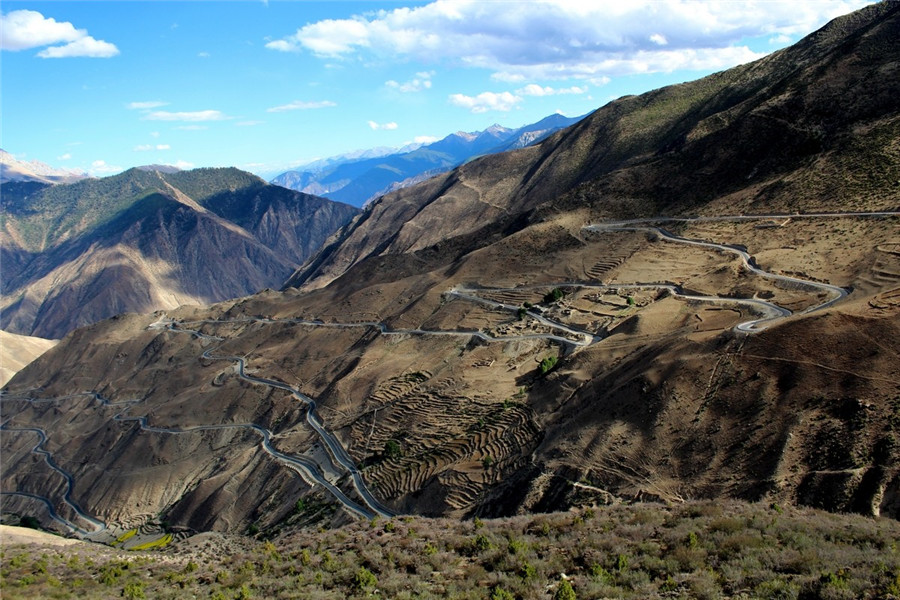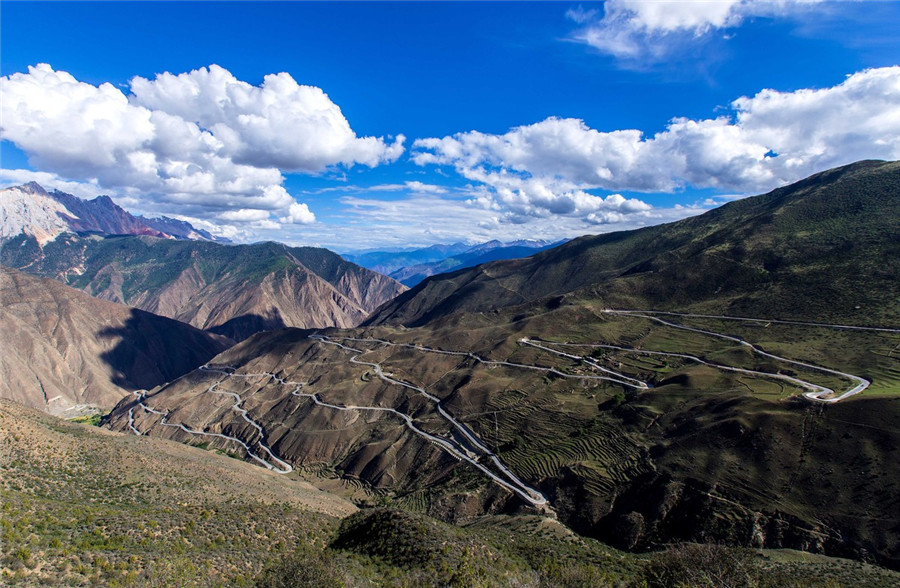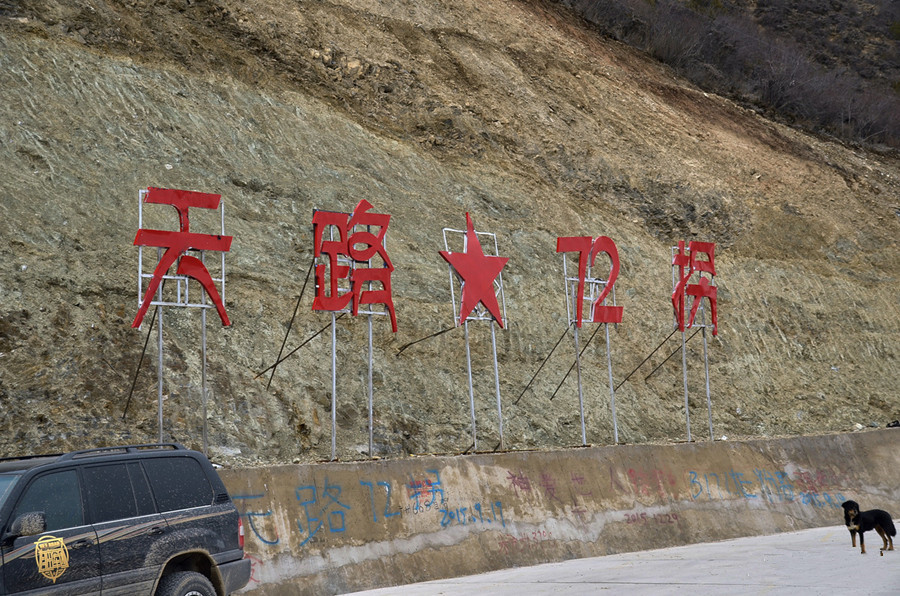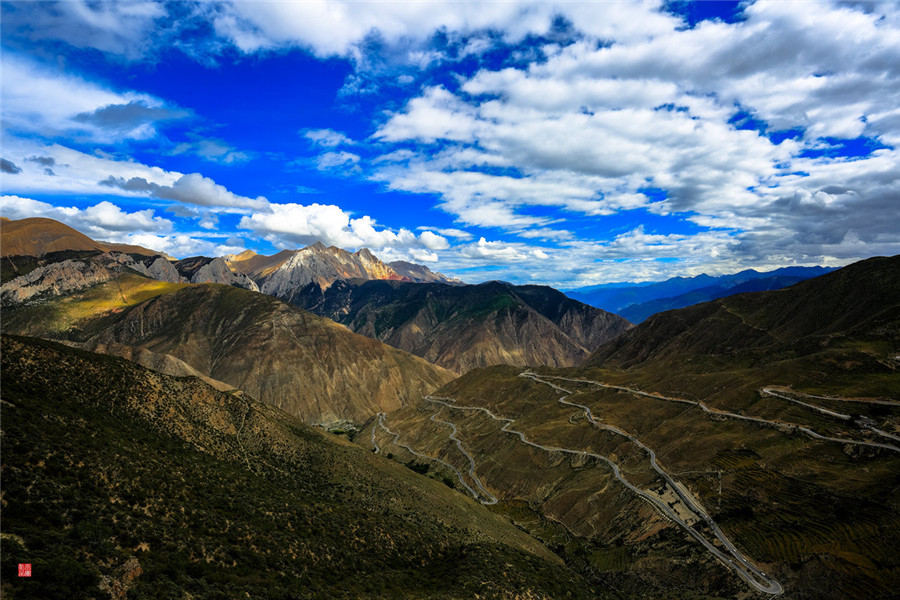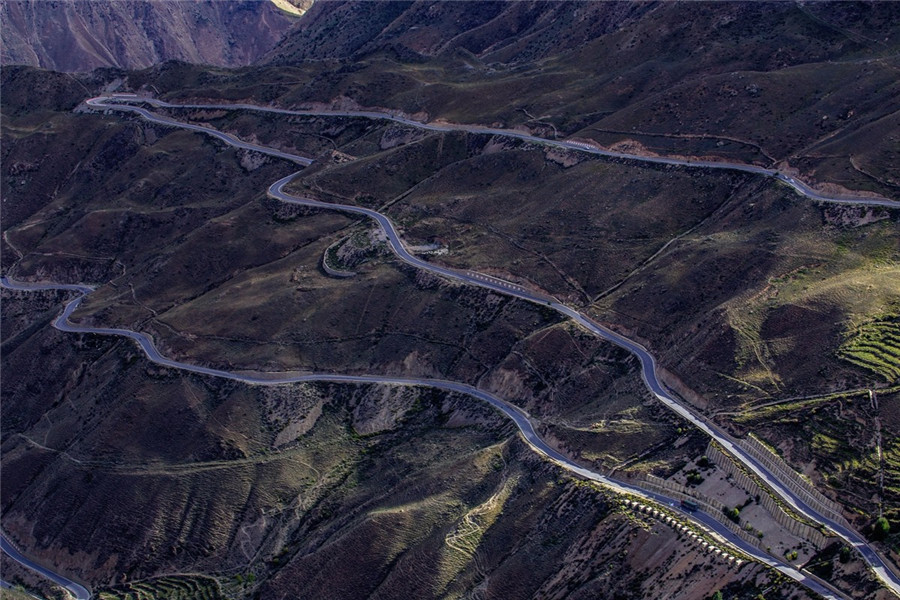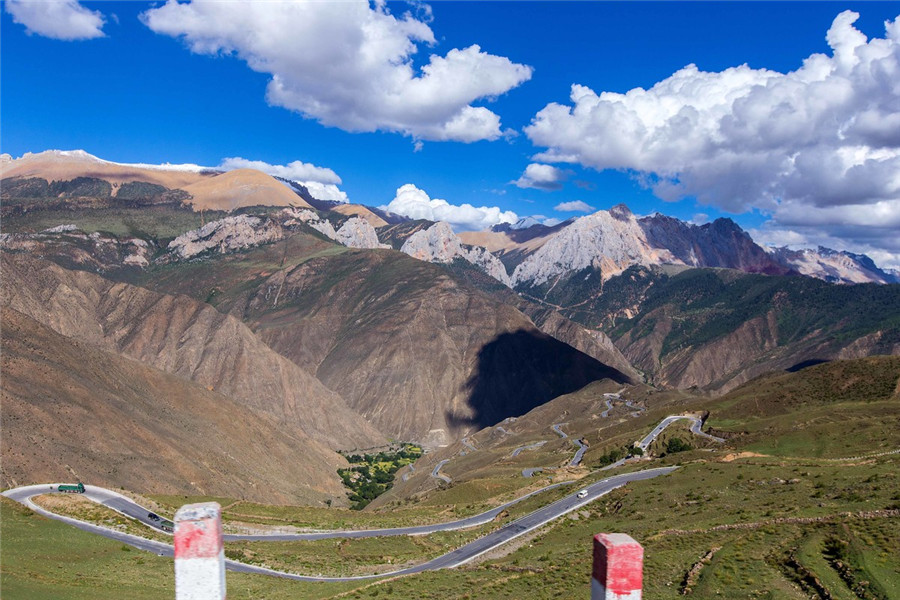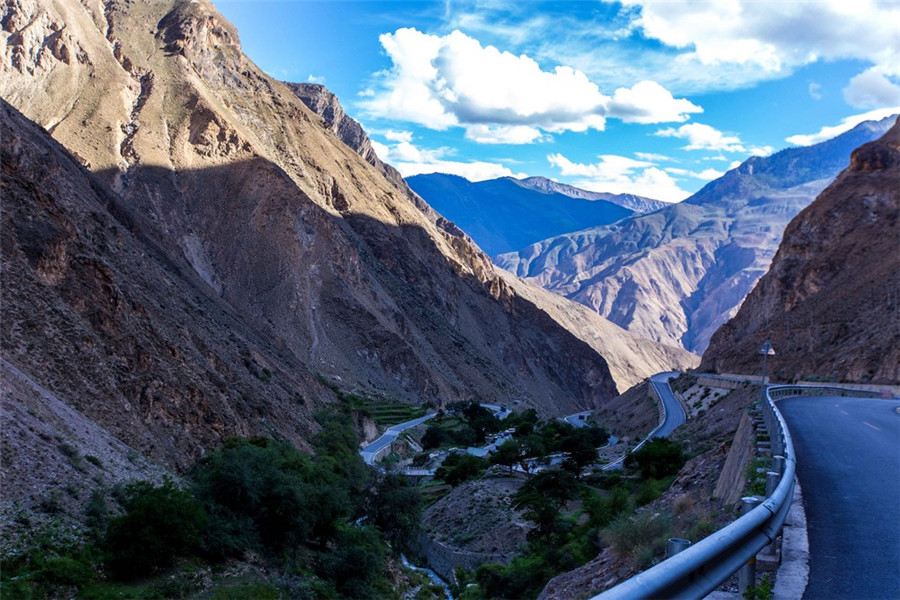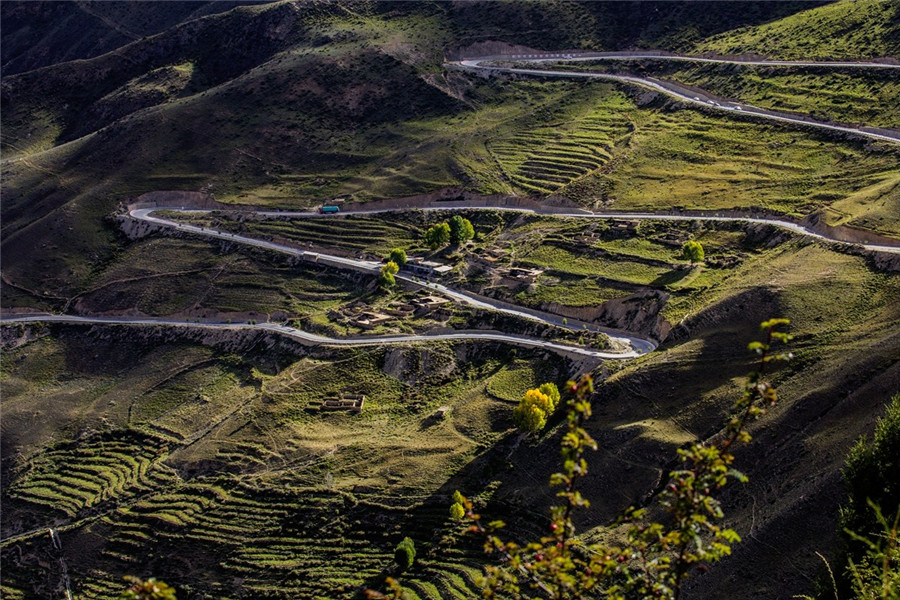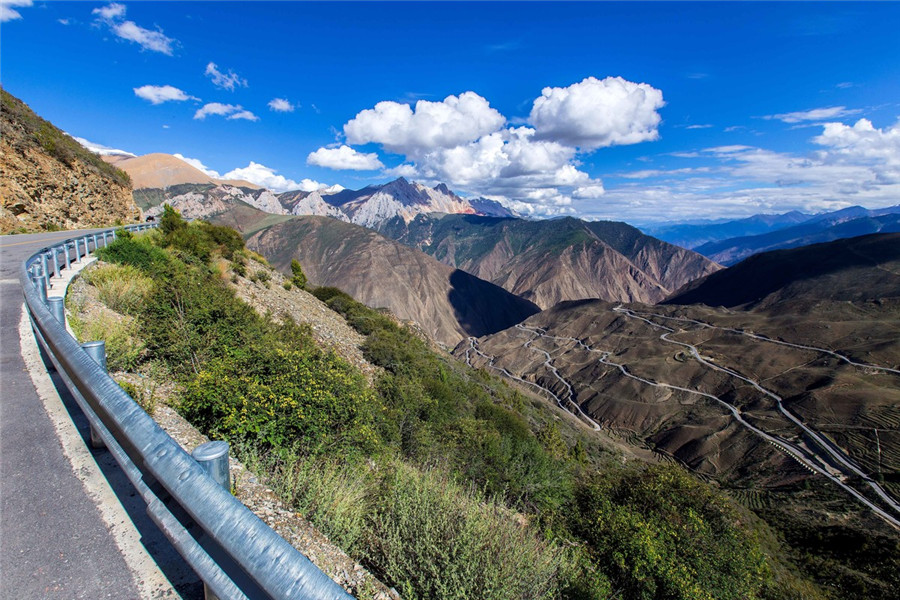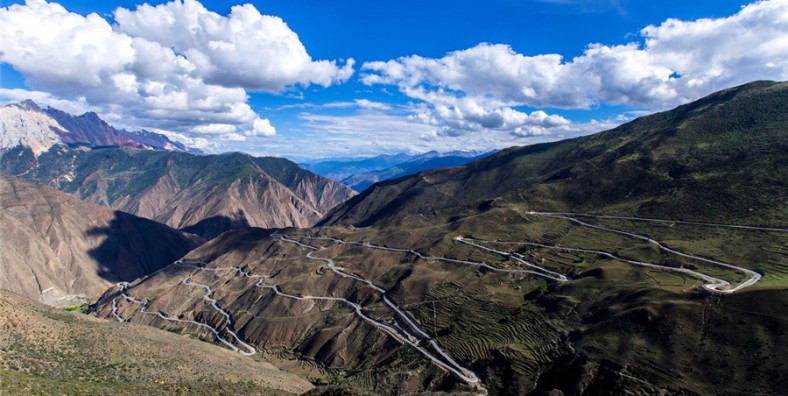

The 72 Turns of Nujiang River Grand Canyon in Baxoi County, Chamdo
For explorers, going through the 72 turns is not worth boasting, but passing through the 72 turns , which is at an altitude of 4,618 meters in Sichuan-Tibet(川藏) route, must be a true adventurer along the Nujiang River.
Here–The 72 Turns of Nujiang River Grand Canyon(怒江大峡谷72拐) in Baxoi(八宿) County, Chamdo(昌都), you may experience the physical discomfort because of high altitude, but you can also admire the spring landscape of rape flowers between the peaks and snow flying in the sky. In short, you can experience the changes of the four seasons in a day. Gradually, you will forget about your sickness, and indulge in the spectacular scenery on both sides of the road.
Want to challenge it ? More details are as follows:
Basic Facts:
Location: Baxoi(八宿) County, Chamdo(昌都) Region, Tibet(西藏) Autonomous Region
Ticket: Free
Opening time: 24 hours
Traffic: you can take the “Chengdu-Bayi(成都——八一) Town” shuttle bus, Chengdu to Bayi Town car passing by 72 crutches; You can also fly to the Bongda Prairie(邦达草原). Of course, follow our team, you don’t have to worry about it.
Accommodation: Baxoi(八宿) County or in Bongda(邦达) Town.
1 The Adventurer’s paradise
“Nujiang(怒江) 72 turns” from the lowest point 3100 meters above sea level, all the way up to the highest point YeLa(业拉) Pass 4651 meters above sea level, and then spiral down to Bangda(邦达) town at an altitude of 4100 meters. It is about 12 kilometers long. As the only route on the southern route of Sichuan(四川) and Tibet)(西藏), for many riders or drivers, it is precisely fulled with excitement and challenge that they would like to have a try.
2 experiencing four seasons in a day
The Sichuan-Tibet(四川——西藏) Highway is the most beautiful but difficult to go there in China. Along the way, it has many peaks over 4,000 meters, so it may show four seasons in a day. In this steep area, but there are the most beautiful rape flowers… square flower fields lying beside the curved road. As for those magnificent rivers and mountains, there is no words to describe them.
3 Bongda Prairie(邦达草原)at an altitude of 4200 meters——best places for taking photos
After the 72 turns of the Nujiang River (怒江) , you can come to the Bangda (邦达)Prairie –located in Baxoi County, Chamdo(昌都) City, which is bred by the high mountains and deep valleys of the Three Rivers basin. It used to be the famous “Tea Horse Ancient Road“, with blue sky and white clouds, meadows, streams, cattle, sheep and horses. In a word,that could satisfy all the fantasies of photography enthusiasts about shooting elements.
The 72 Turns of Nujiang River (怒江72拐), located in Baxoi County (八宿县), Chamdo Prefecture (昌都地区), Tibet, is one of the most iconic and treacherous sections of the Sichuan-Tibet Highway (川藏线). This winding, narrow mountain road, which reaches an elevation of 4,618 meters (15,151 feet) at Yela Pass (业拉山口), offers both thrilling challenges and stunning scenery. Known for its dramatic curves and panoramic views, it’s a must-visit for adventurers, photographers, and road trip enthusiasts.
Overview of the 72 Turns
The “72 Turns” refers to a section of the Sichuan-Tibet Highway that stretches about 12 kilometers, winding from a low point of 3,100 meters (10,170 feet) to the summit at Yela Pass at 4,651 meters (15,255 feet). This section is famous for its intense twists and turns, which have earned it a reputation for being one of the most dangerous and exciting routes in China. Despite being called the “72 Turns,” there are actually more than 130 sharp bends, making this section a true challenge for drivers and cyclists.
Key Features of the Nujiang 72 Turns
1. An Adventurer’s Paradise
The road rises from an altitude of 3,100 meters to 4,651 meters at Yela Pass, offering an exciting and challenging experience for both drivers and motorcyclists. Known for its hairpin bends and steep climbs, it’s a must-try for those seeking an adrenaline rush along the Nujiang River (怒江) valley. The dramatic ascent is followed by a descent to Bangda Town (邦达镇) at 4,100 meters, completing the loop of this awe-inspiring road.
2. Four Seasons in a Day
One of the unique features of this route is its ability to showcase four seasons in a single day. As you travel through the high-altitude terrain, you may encounter snow-covered peaks, blooming meadows, clear skies, and vibrant wildflowers—all in the span of just a few hours. The ever-changing landscape is one of the many reasons why the Sichuan-Tibet Highway is considered one of the most beautiful yet difficult roads in China.
3. Bongda Prairie: A Photographer’s Dream
At an elevation of 4,200 meters (13,780 feet), Bongda Prairie (邦达草原) is a vast, scenic grassland located near the 72 Turns. Once part of the historic Tea Horse Road (茶马古道), this area is renowned for its sweeping views of the high mountains and deep valleys. It is a paradise for photographers, with meadows, rivers, cattle, and horses creating the perfect backdrop for stunning landscape photos.
Best Time to Visit
Autumn: A Feast for the Eyes
The best time to visit the Nujiang 72 Turns is in autumn, from mid-October to early November. During this period, the larch trees, birch, and fir trees along the road turn vibrant shades of gold and red, creating a mesmerizing contrast against the deep blue sky and winding roads. The autumn colors make for a breathtaking visual experience, with the landscape transforming into a living oil painting.
Mild Climate for Travelers
Autumn also offers mild weather, making it the ideal time for road trips. The temperatures are comfortable, and the skies are clear. Early mornings often bring mist that adds a mystical quality to the scenery, while the afternoon sunlight illuminates the mountains and valleys, enhancing the colors of the landscape. This combination of perfect weather and visual beauty makes autumn an unbeatable time to travel.
Challenges of Driving the 72 Turns
1. High Driving Difficulty
The 72 Turns are known for their steep gradients and sharp curves, making driving a challenge. The road is narrow and winding, with some sections lacking guardrails. Drivers need to exercise extreme caution, especially when navigating the more treacherous curves. The difficulty of the drive, however, is part of the allure, as it adds to the sense of adventure.
2. Safety Precautions and Traffic Considerations
Due to the high altitude and extreme weather conditions, the Nujiang 72 Turns can be affected by natural disasters such as rockfalls, landslides, and snowstorms. Travelers should be prepared for sudden changes in weather, especially during the rainy season, and keep an eye on the road conditions. It’s recommended to check weather forecasts and road updates before starting the journey. It’s also advisable to travel with adequate supplies, such as water, snacks, and a power bank, as some sections may have limited mobile phone signal coverage.
3. Viewpoints and Photography Spots
There are several viewpoints along the road where travelers can stop and take photographs of the stunning scenery. The Yela Pass viewpoint is one of the most famous spots, offering a full view of the winding road and the surrounding mountains. For photographers, the early morning light over the pass provides the perfect moment to capture the majestic landscape.
Cultural Significance of the Nujiang 72 Turns
1. The Legendary Sichuan-Tibet Highway
The Sichuan-Tibet Highway (川藏线), which includes the Nujiang 72 Turns, is a historical and cultural symbol. The highway, built in the 1950s, spans over 2,000 kilometers from Chengdu (成都) to Lhasa (拉萨). It is one of the most famous and challenging roads in China, with a rich history tied to the construction of the road by workers who sacrificed greatly to make it passable. Today, it remains a vital connection between Sichuan and Tibet and a road that adventurers continue to travel to this day.
2. Tibetan Culture Along the Route
Along the route, travelers can immerse themselves in the rich Tibetan culture. The area is dotted with Tibetan villages, monasteries, prayer flags, and Mani stones (玛尼堆), which are sacred symbols for the Tibetan people. The Yela Pass area is a particularly important spiritual site, where prayer flags flutter in the wind as symbols of peace and blessings.
3. A Spiritual Journey for Travelers
For many road-trippers, driving the Nujiang 72 Turns is more than just a physical challenge—it is a spiritual journey. Successfully completing the trip is often seen as a significant achievement, drawing travelers closer to their dream of reaching Tibet. Many stop to capture the moment or write down their thoughts, marking the 72 Turns as a key milestone in their adventure.
Planning Your Trip to the Nujiang 72 Turns
1. Best Time to Travel
The best time to visit the Nujiang 72 Turns is in autumn (October to November), when the weather is stable and the scenery is at its most colorful. For those seeking to avoid crowds, weekday travel is recommended. Early morning departures will also allow you to enjoy the peaceful beauty of the road.
2. Suggested Route
To reach the Nujiang 72 Turns, start your journey from Chengdu (成都) along G318 National Road (G318国道), passing through Kangding (康定), Litang (理塘), and Mangkang (芒康) before arriving at Baxoi County (八宿县). The Nujiang 72 Turns is located between Baxoi and Ranwu (然乌). A recommended route for a more complete Sichuan-Tibet experience is Mangkang – Baxoi – Ranwu – Bomi – Nyingchi.
3. What to Bring
-
Clothing: Pack warm clothing due to the high-altitude environment and significant temperature differences between day and night.
-
Supplies: Bring offline maps, as some areas may have limited mobile phone coverage. A camera with extra batteries and power banks is essential for capturing the beautiful scenery.
-
Health: Pack altitude sickness medication, as well as any personal medication, and ensure you have enough food and water for the journey.
Final Thoughts
The Nujiang 72 Turns is a road that challenges both body and spirit. Its breathtaking views, combined with the demanding terrain, create a sense of adventure that draws travelers from all over the world. Whether you’re a seasoned road tripper, a photographer, or someone seeking a deeper connection with nature, this road offers an unforgettable experience that should not be missed. The 72 Turns is more than just a physical route—it’s a journey that tests your courage, your perseverance, and your ability to appreciate the beauty of the world around you.
Translated by: Li Xia/李夏