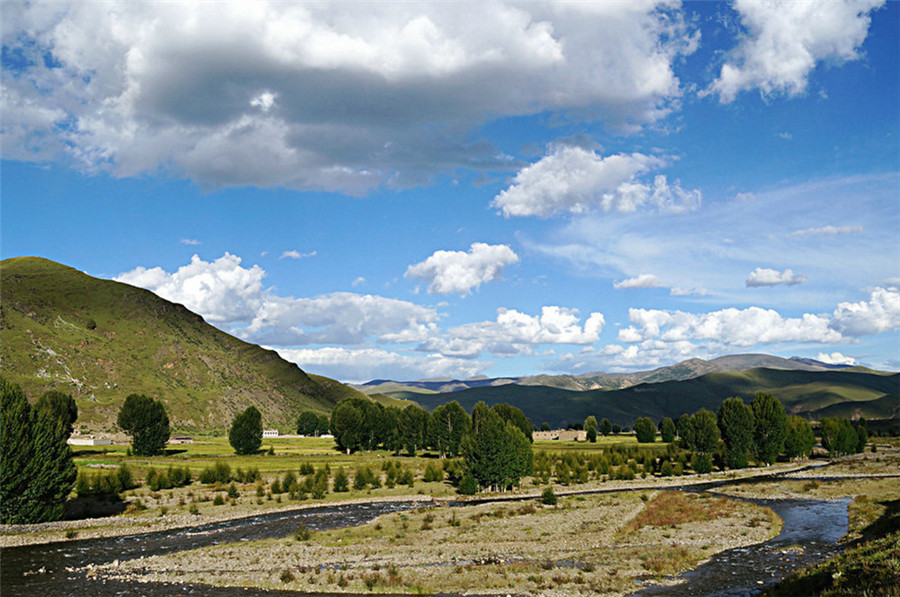
Banghe River in Daocheng County, Garze

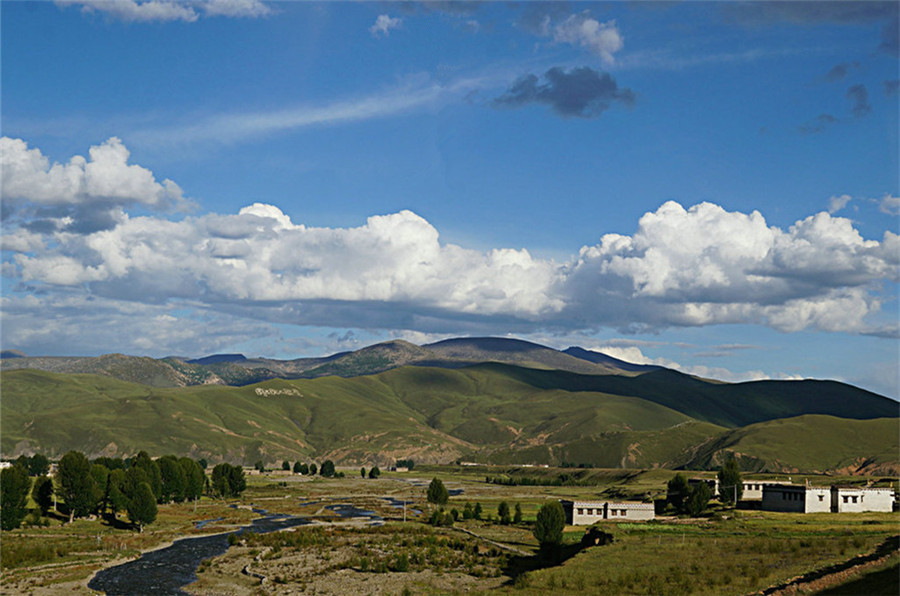
Banghe River (傍河), located in Daocheng County (稻城县), Garze Tibetan Autonomous Prefecture (甘孜州), is a picturesque highland river nestled between Sangdui Village (桑堆村) and Sela Village (色拉村). Flowing through the Sangdui area (north) to Sela (south), the river forms an integral part of the local landscape, with its scenic views often captivating visitors. Notably, “Sangdui Town” (桑堆小镇), “Sela Morning Mist” (色拉晨雾), and “Banghe Evening Sunset” (傍河夕照) are the most famous photographic spots.

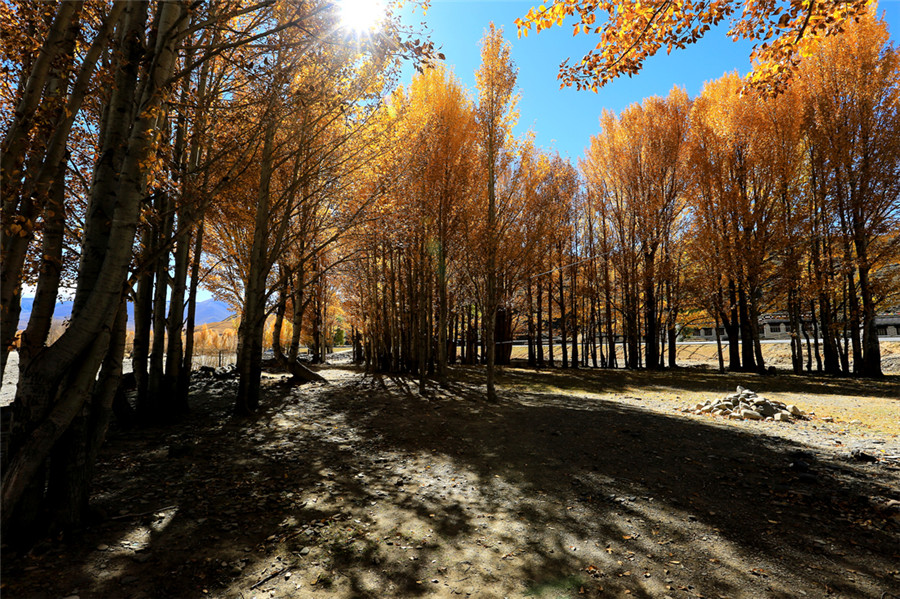
The river and its surrounding landscape are best captured early in the morning or late in the evening, when the lighting is soft and diffused. If you’re lucky enough to witness it, you may also see the misty morning or smoke rising from the villages, adding an ethereal quality to the scene. The nearby poplar trees by the river are often bathed in a beautiful beam of sunlight, creating perfect moments for photography.

The river runs through both Banghe Township (傍河乡) and Sangdui Township (桑堆乡), offering ample opportunities to explore the local highland culture, including traditional Tibetan (藏族) villages. A visit here is a rare chance to experience Tibetan hospitality if invited to a local’s home.

Geographic Location

Banghe River flows between Sangdui Township (桑堆乡) and Sela Village (色拉村). The river’s source is found at the Yudegou Source (余德沟源头) in Daocheng County (稻城县), eventually merging with Zha Chong (扎冲两河口). The total length of the river is approximately 20 kilometers, with an average elevation of 3,750 meters. As part of the Jinsha River (金沙江) secondary tributary system, this river winds through the plateau and forms several terraces and landforms along its course.

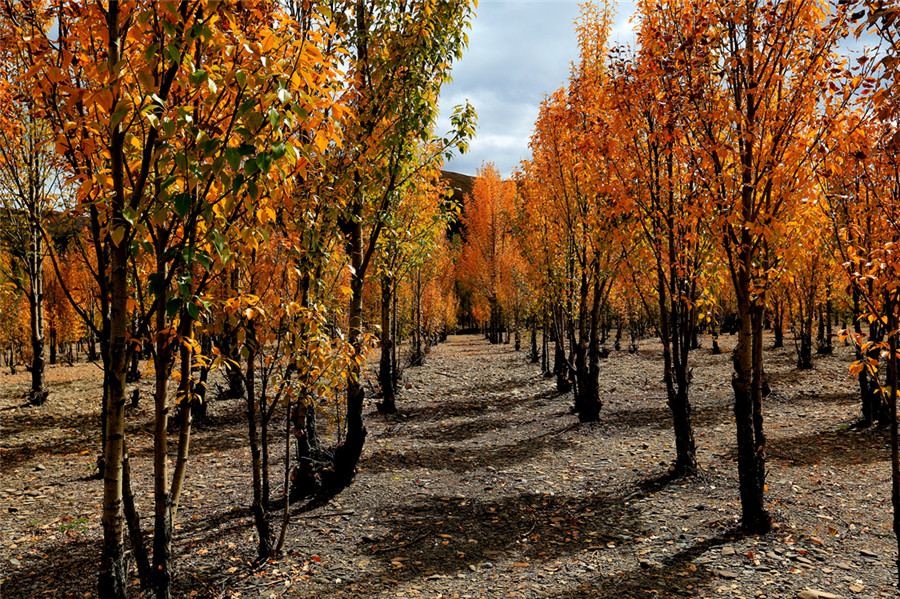
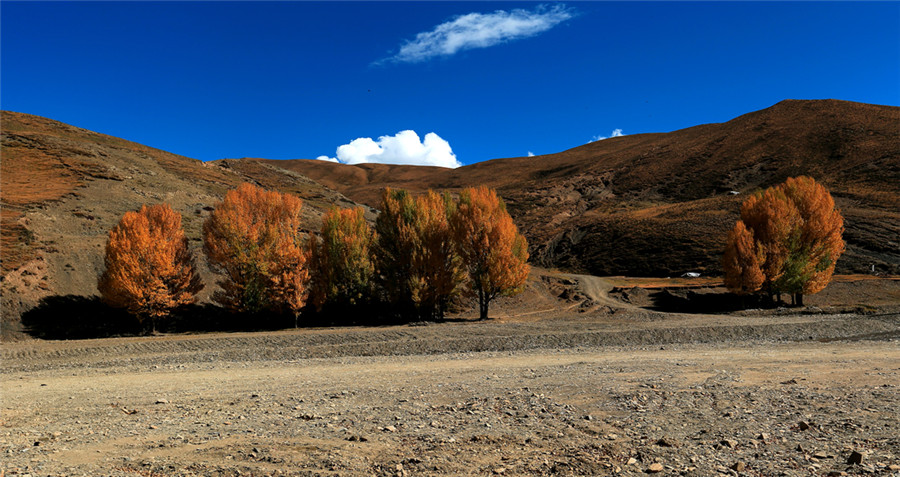
The area around the river features a combination of barley fields, birch forests, Tibetan villages, and monasteries, offering a classic highland pastoral landscape, especially during the autumn months when the Poplar forests (胡杨林) turn golden, and the red grasslands (红草滩) add a vivid contrast. This landscape has earned the river and its surroundings the title of “photographer’s paradise.”

Natural Features

Water Systems and Landscapes

Banghe River’s landscape is defined by three distinct elements:

Water system landscape: The river forms multiple terraces as it runs through the plateau, creating visible geological structures in the dry season. During the wet season, the river appears as a clear blue body of water.

Vegetation landscape: The area consists of three main vegetation zones:

  • Birch Forests (桦树林): Found mainly along the Sela Village (色拉村) section of the river.

  • Barley Fields (青稞田): Concentrated in the Sangdui (桑堆) area.

  • Alpine Shrubs (高原灌木丛): Found in the Yudegou Source (余德沟源头) region.

Seasonal Landscapes

Autumn (September–October): The Poplar trees (胡杨林) turn golden, creating a striking visual contrast with the red grasslands.

Winter: Snow-capped mountains reflect off the river, offering an extraordinary mirrored landscape.

Tourism Information

Classic Tour Routes

Half-Day Tour:

  • Daocheng County (稻城县) → Banghe River Cycling Path (傍河骑行道) (8 kilometers) → Sela Village Viewing Platform (色拉村观景台) → Return.

In-Depth Tour:

  • Sangdui Ancient Monastery (桑堆镇古寺) → Banghe Evening Sunset Photography Spot (傍河夕照拍摄点) → Bengpu Temple Ruins (蚌普寺遗址) → Red Grasslands (红草地).

Photography Tips

Best Photography Times: The best time for photography is during the first hour after sunrise and the last two hours before sunset. During these hours, the light creates the “God’s Light” effect, which is perfect for capturing the river’s beauty.

Polarizing Filter: This will enhance the saturation of the golden poplar trees and the overall landscape.

Photography Locations: Key areas for capturing the river’s scenic beauty include:

  • East slope of Sela Village (色拉村东侧山坡): For sweeping aerial shots of the river.

  • 200 meters upstream of Banghe Bridge (傍河桥上游200米): For photographing the river’s curves.

  • Barley Field Embankments (青稞田田埂): For capturing farming scenes in the highlands.

Archaeological Findings

In 2021, archaeologists discovered the Pilu Site (皮洛遗址) on the third-level terraces along Banghe River. This discovery is the largest Paleolithic (旧石器时代) site found on the Qinghai-Tibet Plateau (青藏高原) to date. The site extends 2 kilometers north to south and 500 meters east to west. Over 3,000 stone tools, including hand axes and flake axes from the Acheulean (阿舍利) culture, were collected, confirming human activity in the Banghe River region at least 130,000 years ago. This discovery provides key evidence for studying ancient climate changes on the plateau.

Ecological Protection

Daocheng County implements a River Chief System (河长制) for managing and protecting the Banghe River. Key protection measures include:

Seasonal Grazing Ban (禁牧区): From Yudegou Source (余德沟源头) to Sangdui Township (桑堆乡).

Water Quality Monitoring (水质监测): Regular water testing conducted by the Daocheng Bureau of Human Resources and Social Security (稻城县人社局).

Tourism Control (旅游管控): No permanent facilities are allowed to be constructed within the core scenic area.

Vegetation Restoration (植被恢复): Since 2019, the region has been actively engaged in replanting birch trees (桦树) along the riverbanks.

Travel Time Reference

Duration: 1–3 hours.

Transportation: From Daocheng County (稻城县), visitors can rent a car or tricycle for about 30 yuan, or choose to rent a bicycle or walk to the river.

Entrance Fee: Free.

Opening Hours: Open all day.

Location

Banghe River is located along the road from Daocheng County (稻城县) to Yading (亚丁), with scenic views on both sides of the highway.