Bangpu Monastery in Daocheng County, Garze

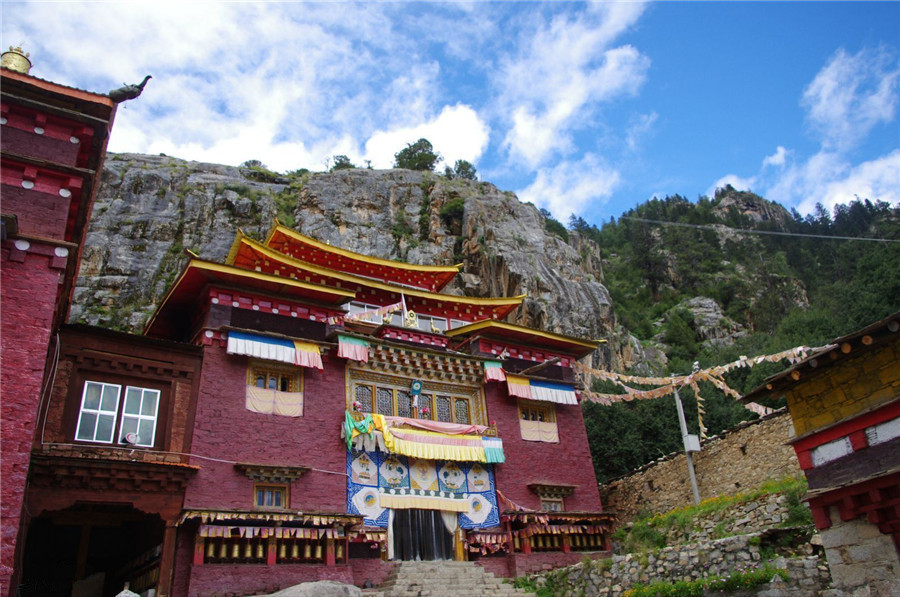
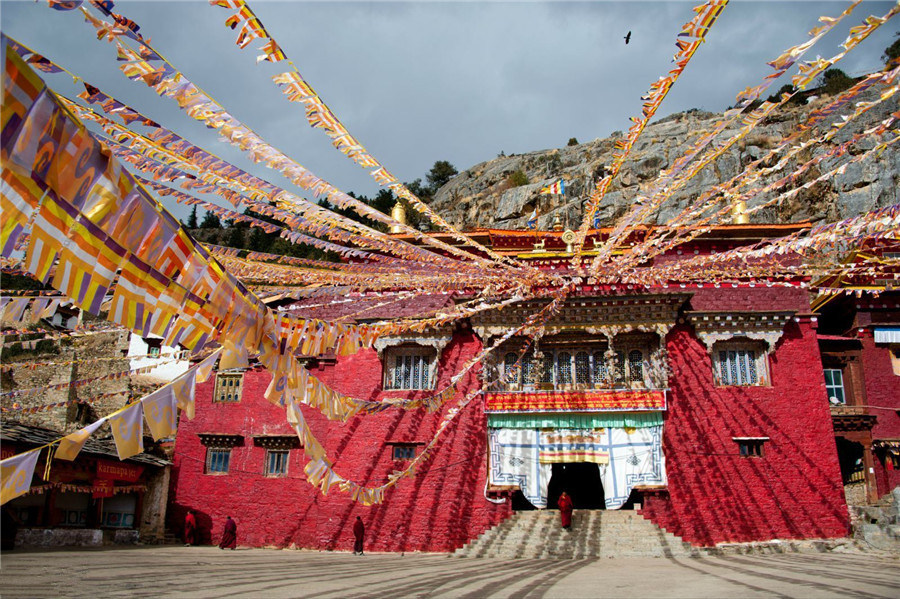
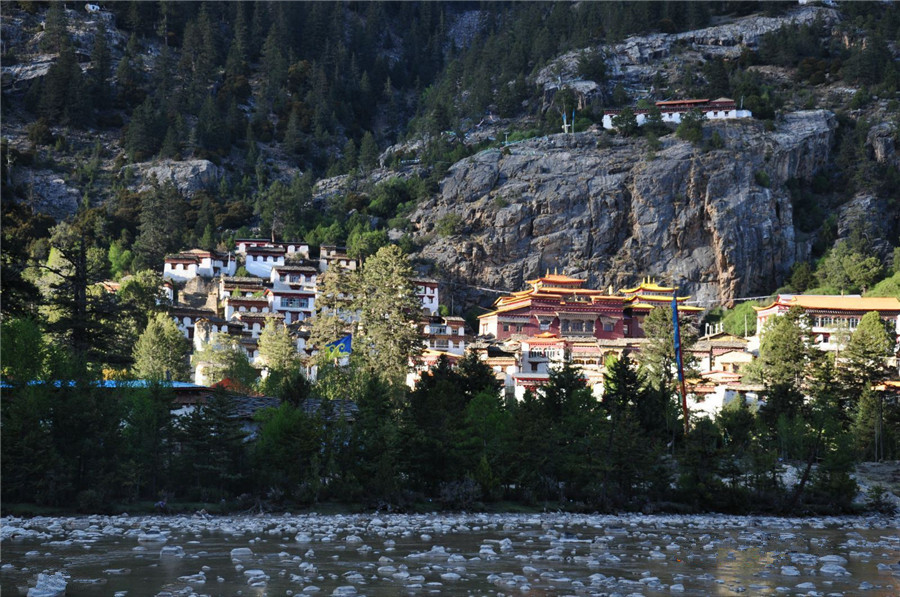
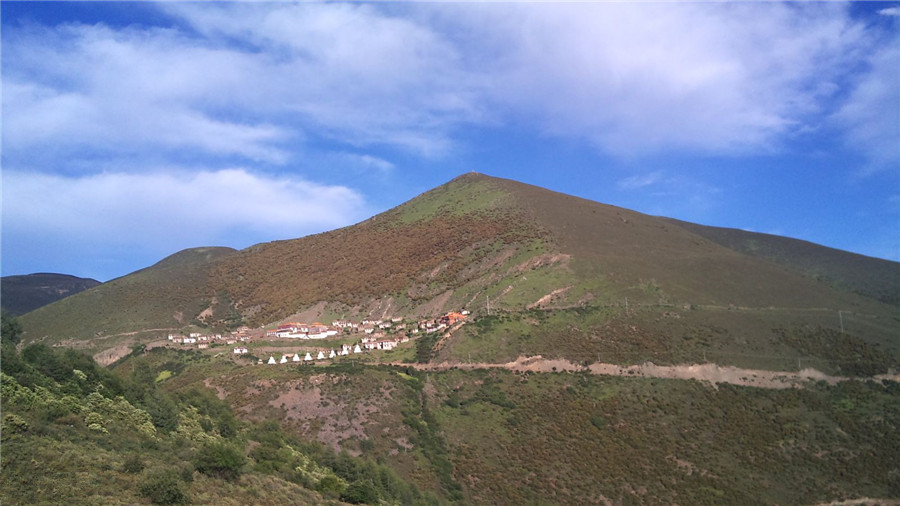
Bangpu Monastery (蚌普寺), also known as Bengbo Monastery (奔波寺), is a prominent Tibetan Buddhist monastery of the Kagyu (Yellow Hat) sect, located in the Sangdui River Valley (桑堆河谷) of Daocheng County (稻城县), Garzê Tibetan Autonomous Prefecture (甘孜藏族自治州), Sichuan Province (四川省). Situated at an altitude of 3,940 meters (12,927 feet), it is approximately 30 kilometers from Daocheng County’s town center. The monastery was founded in 1178 during the Southern Song Dynasty by Karmapa Dunsong Qimba (噶玛巴·都松钦巴), making it over 900 years old, and it remains the oldest existing temple in Daocheng.


Historical Significance

Foundation and Growth

Bangpu Monastery was established by Karmapa Dunsong Qimba (噶玛巴·都松钦巴) in 1178 as part of his effort to spread the Vajrayana teachings of Tibetan Buddhism. The monastery has a rich history tied to the local community and the development of Tibetan religious practices. It was originally built on a majestic cliffside, combining yellow eaves and crimson walls, and surrounded by sacred caves and ancient rock paintings (岩画群), which are significant relics of Tibetan spiritual heritage.

Monastic Practices

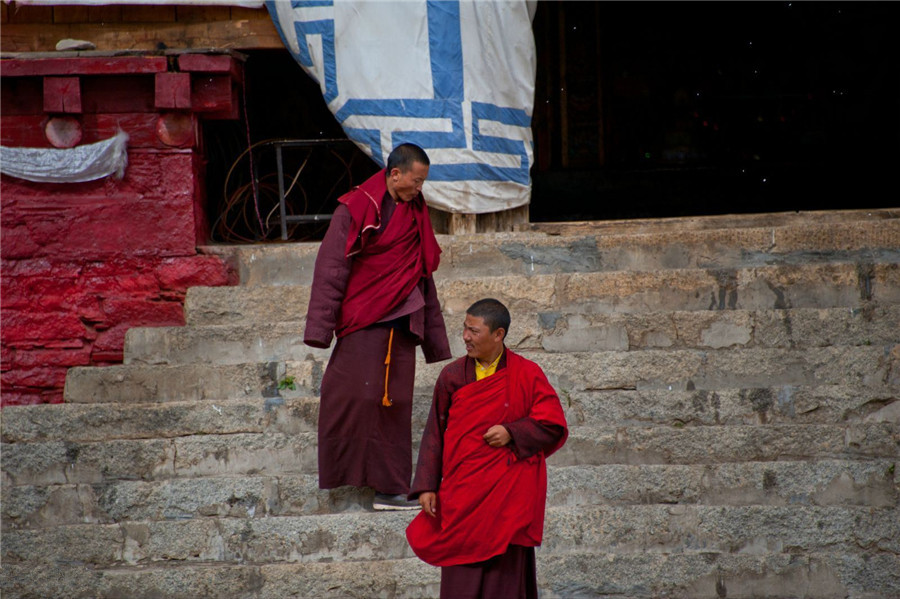
The monastery is particularly famous for its emphasis on oral transmission of Tantric Buddhist teachings rather than relying on scriptures. This unique approach to Buddhist practice, known as Vajrayana or Esoteric Buddhism, requires practitioners to undergo intense training. Monks must spend three years, three months, and three days in solitary retreat (闭关修炼) without interacting with the outside world, including family. After completing this rigorous training, monks are then subjected to a test, which involves leaping up to several meters high cliffs in the monastery’s back mountain, demonstrating their spiritual resilience and physical prowess.


The Life of Karmapa Dunsong Qimba

Karmapa Dunsong Qimba (噶玛巴·都松钦巴), who founded the monastery at the age of 60, spent the remainder of his life there, passing away at the age of 86. During his time at the monastery, he became a highly respected spiritual leader, deeply loved by the local people. Before his passing, he asked his followers whether they wished to preserve his physical body or have a statue made in his likeness. The followers chose to have a statue made, which is self-crafted by Dunsong Qimba himself using the reflection of lake water to create a life-sized statue with the face of an 80-year-old man and the body of an 8-year-old child.

This self-crafted statue has been preserved at Bangpu Monastery and is considered one of the most important relics of the Karmapa lineage in Daocheng and the surrounding region. The statue is now housed inside the monastery following its restoration in 1984.


Ancient Rock Art and Tibetan Inscriptions

The monastery is also home to many ancient rock paintings and meditation caves on its back mountain (后山岩壁), where monks would traditionally meditate and perform rituals. One of the most significant relics is an ancient Tibetan inscription, written by Karmapa Dunsong Qimba with his own nasal blood. The inscription remained an unsolved mystery for centuries until 1999, when A Gong Rinpoche (阿公活佛), a prominent Tibetan Lama, deciphered it. The inscription reads:

“I have traveled through all of Kham, and this is the most beautiful place.” This inscription highlights the spiritual significance of Bangpu Monastery and its scenic surroundings, which have long been revered as a sacred site by the locals.


Cultural and Religious Significance

Vajrayana Practice

Bangpu Monastery is a center of Vajrayana Buddhism, which emphasizes Tantric practices. These teachings focus on the transformative power of rituals, mantras, and visualizations, which are central to the monastery’s religious activities. Monks at Bangpu engage in long periods of solitary meditation and spiritual discipline in the caves surrounding the monastery.

The monastery’s unique training methods, including the difficult cliff-leap test, embody the esoteric nature of Vajrayana Buddhism, which is practiced in only a few select monasteries across Tibet. The emphasis on oral transmission and meditative isolation helps preserve the integrity of the tradition and ensures its deep connection to Tibetan spirituality.


Architecture and Artwork

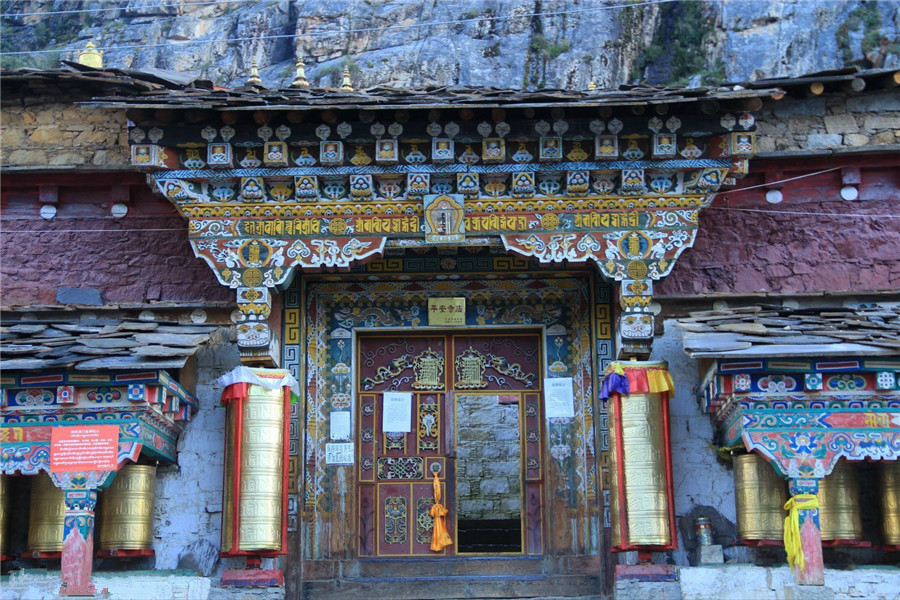
The architecture of Bangpu Monastery is a fusion of traditional Tibetan styles and local influences. The yellow roofs and crimson walls contrast beautifully with the natural surroundings, including the rock cliffs and lush valleys. The monastery’s inner sanctum contains numerous mural paintings that depict various Buddhist deities and Jataka tales (佛教本生故事).

In addition to the self-made statue of Karmapa Dunsong Qimba, the monastery is home to other relics, including mantra stones, golden saddles, and the 10th Panchen Lama’s throne. These items are considered highly sacred by the local Tibetan population and are kept with great reverence.


Visitor Information

How to Get There

Bangpu Monastery is located about 30 kilometers from Daocheng County (稻城县). Visitors can reach the monastery by car from the town, with a drive time of approximately 1 hour. The road to the monastery is mostly paved, but it is recommended to use a 4-wheel-drive vehicle for certain stretches due to the rough terrain.

Best Time to Visit

The best time to visit Bangpu Monastery is during the spring and summer months (April to September), when the weather is milder and the surrounding valley is lush and green. Winter months can be cold due to the high altitude, so visitors should be prepared for cold weather and high-altitude conditions.

Things to Note

  • Respect Religious Practices: Visitors should be mindful of local customs and Tibetan Buddhist traditions while visiting the monastery. It is customary to circumambulate the monastery clockwise (顺时针绕行).

  • Altitude Awareness: Daocheng is located at a high elevation (3,940 meters), so visitors should take necessary precautions for altitude sickness.


Nearby Attractions

  • Sangdui River Valley (桑堆河谷): A beautiful natural area that surrounds the monastery, known for its mountainous landscapes, flowing rivers, and rich Tibetan culture.

  • Yala Snow Mountain (雅拉雪山): One of the most sacred peaks in the area, often included in pilgrimages by local Tibetans. It offers breathtaking views and excellent hiking opportunities.