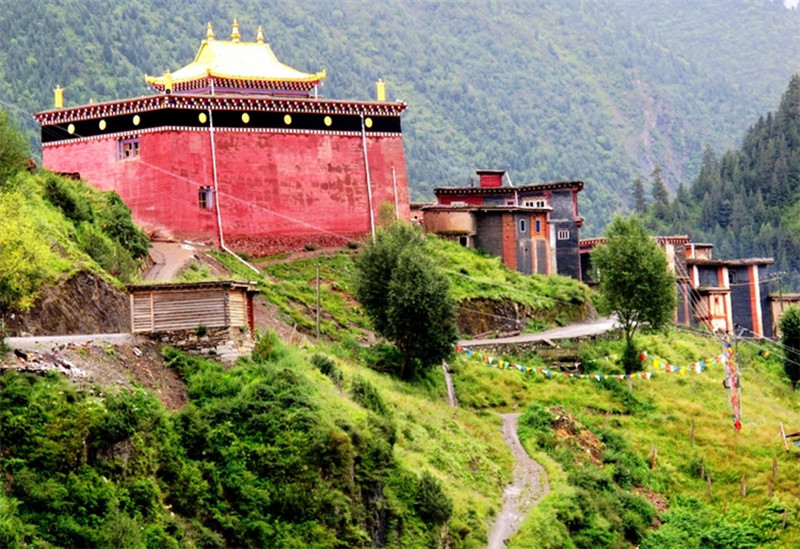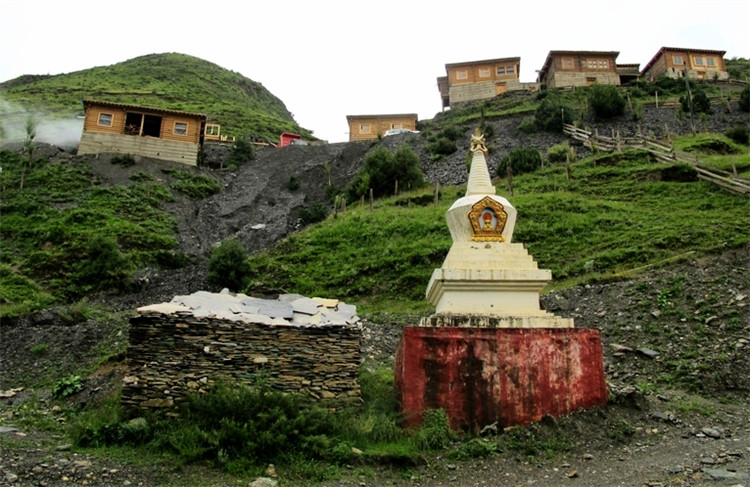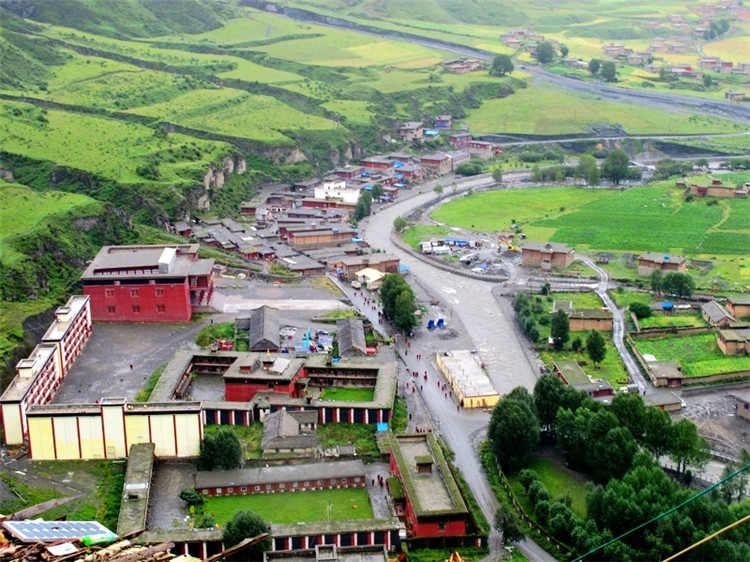
Dzongsar Monastery in Dege County, Garze
Dzongsar Monastery, also known as Dzongsar Gonpa (རྫོང་གསར་དགོན།) in Tibetan, is a historic Buddhist monastery located in Dege County (德格县), Garze Tibetan Autonomous Prefecture (甘孜州), Sichuan Province (四川省), China. Situated southeast of the town of Derge, it is part of the Kham region of Tibet. Established in 746 AD, the monastery has a rich history, having undergone significant transformations over the centuries. Today, it remains a vibrant center of Buddhist learning and practice.
History
Early Origins and Transformation
Founded in 746 AD by a Bönpo (苯教) lama, Dzongsar Monastery initially served as a small temple called Jowo-Lha-Chig-Kar-Chig. The monastery’s Bönpo shrine remained until 1958 when it was destroyed during the political upheavals in Tibet. Over time, the monastery transitioned through various Tibetan Buddhist sects, first becoming a Nyingma (宁玛派) and Kadampa (噶当派) temple before being formally established as a Sakya (萨迦派) monastery in 1275 by Drogön Chögyal Phagpa.
Before its destruction in 1958, Dzongsar housed between 300 and 500 permanent monks, with many others visiting for teachings and rituals. The monastery boasted a collection of 23 temples, including sacred spaces like Khamshe Shekdra, Karmo Taktsang retreat center, and Zingkhok Trawo retreat center. It also became a hub for the Rimé (宁玛派) movement, a non-sectarian approach to Tibetan Buddhism, gathering teachings from a variety of Buddhist schools.
The 1958 Destruction and 1983 Reconstruction
In 1958, Dzongsar Monastery was destroyed during the political movements in Tibet. The sacred temples and artifacts were lost, and the monastery was left in ruins for nearly three decades. Rebuilding efforts began in 1983 under the leadership of Dr. Lodrö Puntsok, who oversaw the restoration of the monastery. While the grandeur of the original structure has not been fully restored, six major temples and over 180 monk residences have been rebuilt. The monastery now covers an area of 48,200 square meters and houses more than 200 monks.
Architecture
Gonpa Palace (贡纳宫)
Gonpa Palace is the oldest and most important building in Dzongsar Monastery. It was built by the Gonpa family, who took their name from the nearby Gonpa ridge. This palace was constructed under the guidance of the first abbot of the Sakya tradition in Dzongsar, Gonpa Lama. The palace remains a central structure within the monastery and is considered a symbol of the monastery’s Sakya heritage.
Arig Palace (阿日宫)
Arig Palace was built after the seventh Gonpa Lama and became the residence of the Arig Lama. Over time, the Arig Lama and the Gonpa Lama alternated as the head monks of Dzongsar. The palace’s historical significance lies in its connection to the succession of spiritual leaders within the monastery, and it is considered an essential part of Dzongsar’s leadership structure.
Chingje Palace (钦哲宫)
Chingje Palace was expanded during the tenure of Jamyang Khyentse Wangpo (蒋扬钦哲旺波). The palace was designed to house the head lama and provide a space for the continued transmission of teachings. Jamyang Khyentse Wangpo was instrumental in establishing Dzongsar as a significant center for Buddhist education, and the Chingje Palace represents his contributions to the monastery’s spiritual development.
Notable Lamas of Dzongsar
Jamyang Khyentse Wangpo (蒋扬钦哲旺波)
Jamyang Khyentse Wangpo is one of the most revered lamas in the history of Dzongsar Monastery. Recognized as a reincarnation of several great Buddhist figures, he was instrumental in spreading the teachings of the Rimé movement and Tibetan Buddhism as a whole. Jamyang Khyentse Wangpo was known for his deep understanding of all eight major Tibetan Buddhist schools and his efforts to harmonize them under a non-sectarian approach.
Jamyang Khyentse Chökyi Lodrö (蒋扬却吉洛珠)
Born in 1893, Jamyang Khyentse Chökyi Lodrö was recognized as the reincarnation of Jamyang Khyentse Wangpo. Like his predecessor, he was a significant figure in Dzongsar’s history and continued to teach and spread Buddhist teachings across Tibet. His spiritual insights and miraculous feats further solidified the monastery’s status as a center of profound learning.
Jamyang Tuden Chökyi Gyaltsen (蒋扬土登曲吉佳措)
Jamyang Tuden Chökyi Gyaltsen, born in Bhutan in 1961, is the current head lama of Dzongsar Monastery. He was recognized as the reincarnation of Jamyang Khyentse Chökyi Lodrö and has continued to guide Dzongsar’s growth in the modern era. Under his leadership, Dzongsar has expanded its global influence, establishing Buddhist centers in India, Bhutan, Canada, and other parts of the world.
Current Status
Today, Dzongsar Monastery is a thriving center of Buddhist practice and education. The monastery hosts over 150 religious ceremonies annually, including empowerment rituals and teachings from various Buddhist traditions. The monastery also operates a school with about 60 students, where both general education and Tibetan Buddhist teachings are imparted.
In addition to its religious and educational activities, Dzongsar is known for its incense production. Dzongsar Tibetan Incense, made from rare and natural herbs, is sold commercially and is praised for its healing properties.
Attractions
Key Temples
-
Gonpa Palace (贡纳宫): The oldest and most significant palace in Dzongsar Monastery, representing the Sakya lineage.
-
Arig Palace (阿日宫): The residence of the Arig Lama, a key figure in the monastery’s leadership history.
-
Chingje Palace (钦哲宫): Expanded under Jamyang Khyentse Wangpo, this palace is integral to Dzongsar’s spiritual development.
Scenic Environment
The monastery is located in a serene, mountainous environment, offering visitors a peaceful retreat for contemplation and learning. The surrounding areas are rich in Tibetan cultural heritage, with opportunities to explore local Tibetan traditions and Buddhist practices.
Visiting Information
Access and Tickets
Dzongsar Monastery is open year-round, and entry is free, although donations are appreciated to support the monastery’s ongoing projects. Visitors can reach the monastery by taxi from Dege County, which is approximately 20 minutes away by car. The monastery is part of a larger cultural and spiritual tour of the Garze Tibetan Autonomous Prefecture, known for its stunning landscapes and Tibetan Buddhist heritage.
Incense and Cultural Products
Dzongsar Monastery produces and sells its own line of Tibetan incense, which is made from medicinal herbs sourced from the highlands of Eastern Tibet. The incense is said to have both spiritual and health benefits, making it a popular item for visitors to take home as a reminder of their visit.