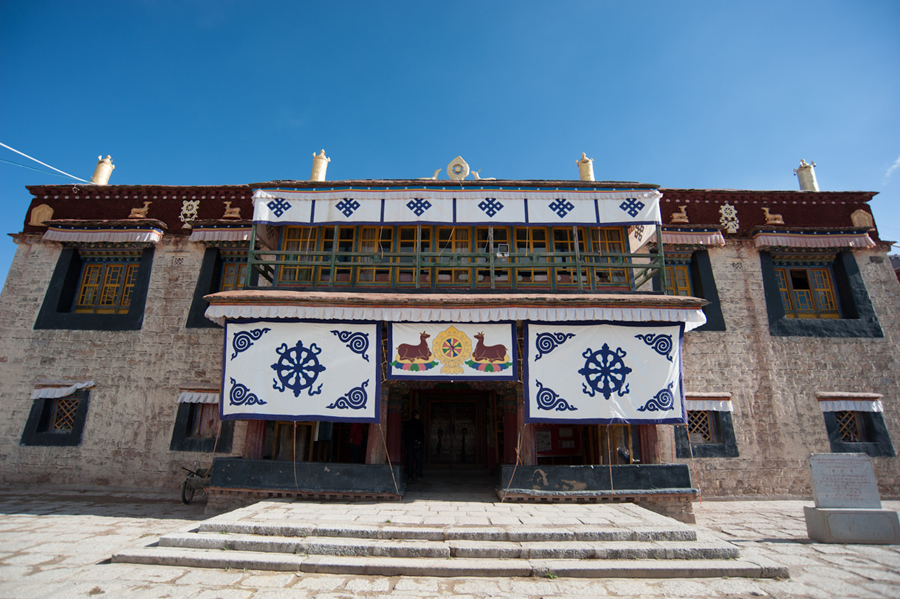
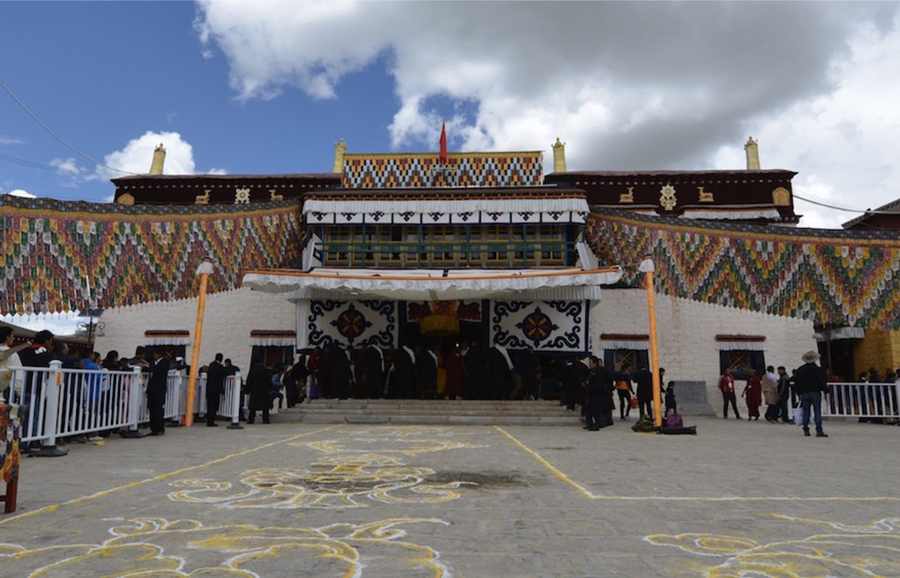
Xiadengsi Monastery in Seni District, Nagqu
Xiadengsi Monastery (孝登寺), located in the central area of Nagqu Town (那曲镇), Seni District (色尼区), Tibet, is a significant religious site with a deep historical and cultural heritage. Founded in 1814 by the 4th Living Buddha, Lobsang Zhenzhu Danba Jiao Tso (洛桑尊珠·丹白嘉措), the monastery originally belonged to the Nyingma sect (宁玛派) and later transitioned to the Gelug sect (格鲁派). It currently hosts over 60 monks and is led by the 7th Living Buddha, Zhukang Tuden Kaju (珠康·土登克珠).
The monastery houses several key structures, including the Main Assembly Hall (大经堂) and the Jampa Buddha Hall (强巴佛殿), and is home to two primary educational academies: Mini Zha Tsang (米尼扎仓) and Juba Zha Tsang (局巴扎仓).
History of Xiadengsi Monastery
The origins of Xiadengsi can be traced back to the early 16th century, when the Gelug sect (格鲁派) faced persecution under the reign of King Zhaba Han (藏巴汗王) in Tibet. During this time, monks from Nagqu and Amdo (安多) established temporary tent monasteries during the summer months to serve the spiritual needs of the pastoral communities in northern Tibet. These seasonal tent monasteries later evolved into permanent religious structures.
In 1674, following a smallpox epidemic in northern Tibet, the Qing Emperor Kangxi (清康熙帝) allocated funds for disaster relief, which led to the establishment of a large-scale prayer ceremony in Nagqu to pray for the emperor’s longevity. The 5th Dalai Lama (五世达赖) named the prayer assembly “Xiadeng Cuoba” (孝登措巴), which ultimately became the name for the monastery.
In 1814, the monastery underwent significant expansion, including the construction of a large stone and wood structure for the Main Assembly Hall, with the 9th Dalai Lama (九世达赖) naming it “Xiadeng Zhudan Dejin” (孝登珠丹德吉林). By 1904, after further expansion, it became the largest Gelug sect monastery in the Nagqu region. The 13th Dalai Lama (十三世达赖) visited the monastery in 1908, where he stayed for over a month and initiated the Chöpa Dharmachakra Ceremony (传昭大法会), a major religious event.
The monastery was renovated with national funding in 1982. The Panchen Lama (班禅额尔德尼·确吉杰布) has visited the monastery several times, including in 2016, 2019, and 2024, to bless the people and offer teachings.
Key Architectural Features
Xiadengsi Monastery is home to a variety of impressive structures:
-
Main Assembly Hall (大经堂)
-
Jampa Buddha Hall (强巴佛殿)
-
Manjushri Hall (文殊菩萨殿)
-
Protective Deity Hall (护法神殿)
The monastery houses two major educational institutions, Exoteric Buddhism Academy (显宗学院) and Esoteric Buddhism Academy (密宗学院), where Geshe degrees (格西学位) are awarded each year in the 9th Tibetan lunar month. The monastery spans over 40,000 square meters and includes various statues and relics such as a copper statue of Buddha Shakyamuni (释迦牟尼铜像), a 10-meter-high gilded copper Buddha statue (金铜佛像), and gilded statues, as well as Tibetan scroll paintings (唐卡) and ritual instruments (法器).
Two Key Academies:
-
Mini Zha Tsang (米尼扎仓): Dedicated to exoteric teachings.
-
Juba Zha Tsang (局巴扎仓): Focused on esoteric teachings.
Religious and Cultural Activities
The monastery is a hub for vibrant religious practices and ceremonies. Some of the key annual events include:
Tibetan New Year Ceremony (藏历元月法会)
Held every Tibetan New Year (藏历元月), the Great Prayer Ceremony is performed to pray for world peace, national prosperity, and the well-being of all people.
Mingzhu Festival (明珠节)
Held in the 8th month of the Tibetan lunar calendar, this festival was initiated by the 5th Living Buddha, who was a physician. During the Mingzhu Festival, medicinal herbs are blessed by senior monks and distributed to the local people after seven days of chanting and prayers.
Awards and Honors
The monastery has received several prestigious awards for its dedication to religious harmony and cultural preservation:
-
In 2013, it was recognized by the State Administration for Religious Affairs (国家宗教事务局) as an Outstanding Religious Organization in the Second National Harmony Temple Award.
-
In 2022, it was honored by the United Front Work Department (中央统战部) as an Advanced Religious Collective in China.
Xiadengsi Monastery remains one of the most important spiritual centers in Nagqu (那曲) and Tibet. With its rich history, diverse religious practices, and cultural contributions, it continues to be a focal point for Buddhist education, religious activities, and pilgrimage in the region. The monastery’s ongoing commitment to preserving Tibetan culture and fostering peace makes it a must-visit destination for both spiritual seekers and cultural enthusiasts.