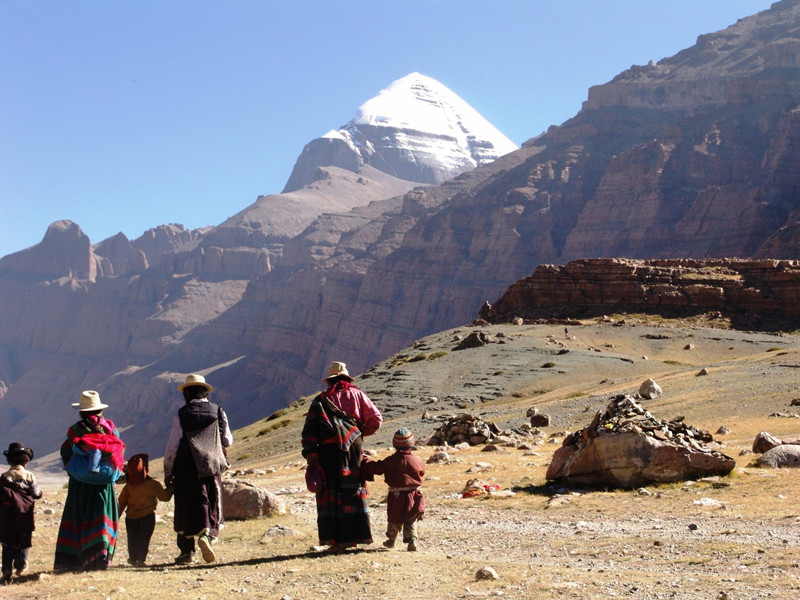
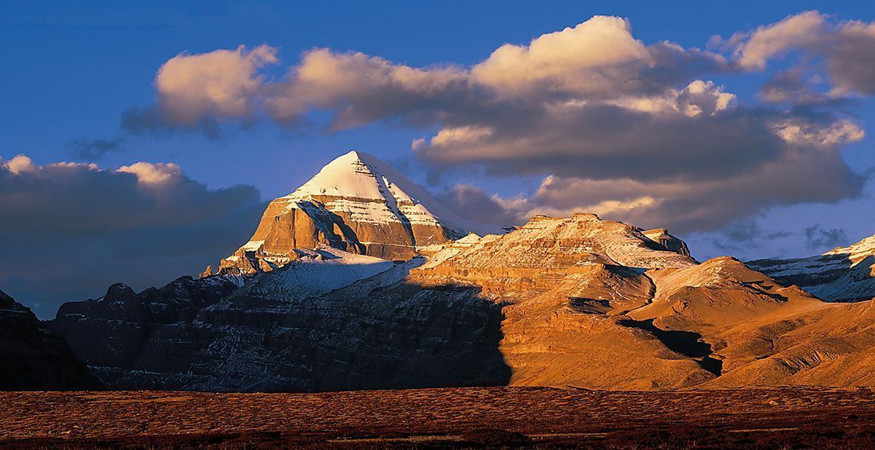
Kailas Range in Tibet

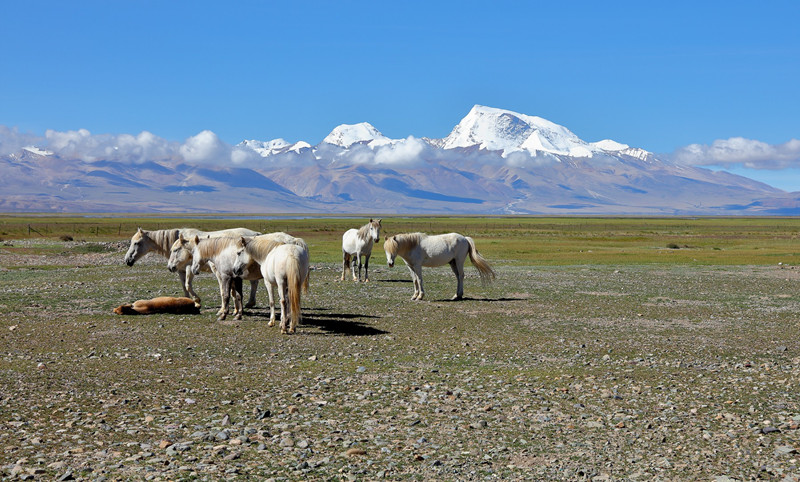
The Kailas Range (冈底斯山脉), located in the southwestern part of Tibet Autonomous Region (西藏自治区), is one of the most significant mountain ranges in the Himalayas, lying to the north of the Himalayas and running roughly parallel to them. Extending over 1500 kilometers from west to east, the Kailas Range is a striking geographical feature, with an average elevation of 5500-6000 meters. It serves as a natural boundary between the northern and southern parts of Tibet and is recognized as an important watershed separating the Indian Ocean water system from the internal Tibetan water system.

Main Peaks

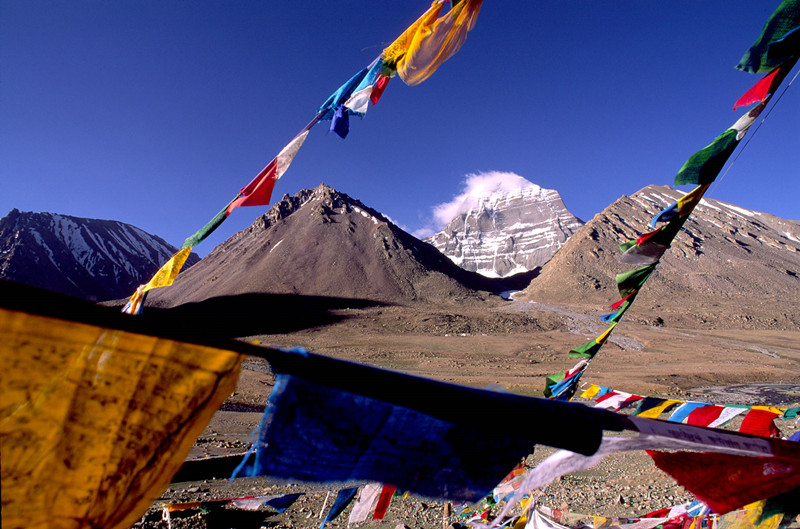
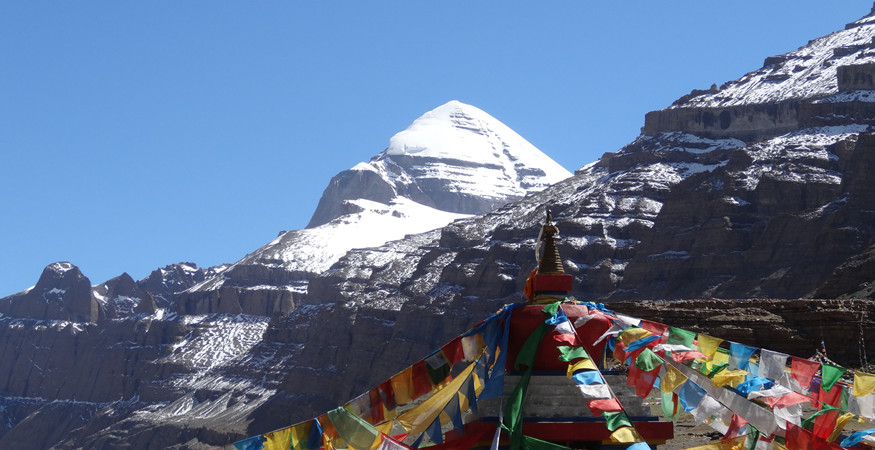
  • Mount Kailash (冈仁波齐峰): The highest peak of the Kailas Range, standing at 6656 meters, is not only the tallest mountain in the western section of the range but also one of the holiest mountains for multiple religions, including Tibetan Buddhism, Hinduism, and Bon. Known as the “King of Sacred Mountains”, it is a pilgrimage site for thousands of devotees.

  • Lobpo Peak (冷布岗日): The highest peak of the Kailas Range, reaching an elevation of 7095 meters.

Formation and Evolution

The Kailas Range was formed after the Yanshan Movement (燕山运动), a period of tectonic activity caused by the collision of the Eurasian plate and the Indian plate. This collision, which began in the Eocene Epoch, was responsible for shaping the mountainous landscape of the region. The southern boundary of the Kailas Range marks a transition from the high-altitude northern Tibetan Plateau to the more temperate southern Tibetan valleys.

Geographic Location and Significance

The Kailas Range stretches across Tibet, from the Sasser Ridge (萨色尔山脊) in the southeast of the Karakoram Range (喀喇昆仑山脉) to Lhasa (拉萨) in the east, near Namtso Lake (纳木错). It is considered a vital geographical boundary between Tibet’s north and south, dividing the cold Tibetan Plateau in the north from the more temperate valleys of southern Tibet.

The range also plays an essential role in Tibet’s hydrology, acting as the primary watershed between the rivers flowing to the Indian Ocean and those in the northern Tibetan region.

Dimensions and Key Features:

  • Length: Over 1500 kilometers

  • Width: About 60-70 kilometers

  • Elevation: Average altitude of 5500-6000 meters, with the highest peak, Mount Kailash, at 6656 meters

  • Start: From Sasser Ridge and Ali Shiquan River (阿里狮泉河)

  • End: Reaching Lhasa, where it meets the Nyainqêntanglha Range (念青唐古拉山脉).

Geological Characteristics

The Kailas Range lies within one of the longest and most complex mountain chains in Asia. Its orientation is primarily northwest-southeast, controlled by the Garlung Zangbo-Yarlung Tsangpo Fault (噶尔藏布一雅鲁藏布江断裂). Several smaller branches of the range stretch out, influenced by various faults. Notably, the Nyingchi (日喀则) area sees mountains shift direction due to north-east and north-west faults, creating jagged ridges and varying mountain orientations.

Cultural and Religious Importance

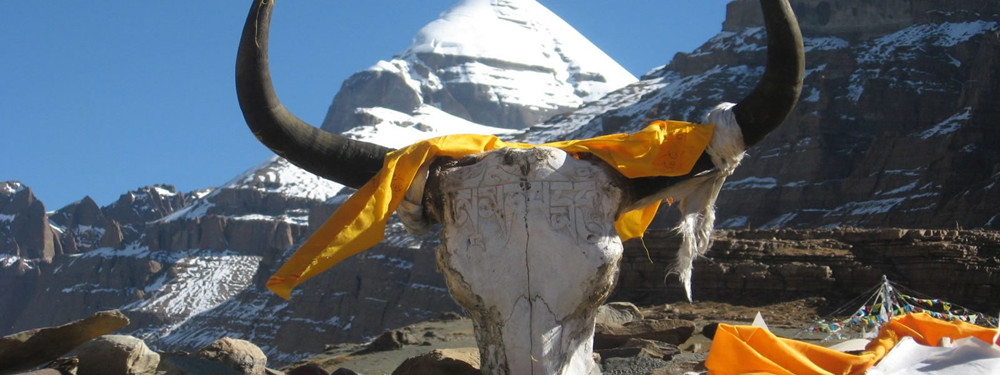
The Kailas Range and its centerpiece, Mount Kailash, are considered sacred by followers of Tibetan Buddhism, Hinduism, and Bon (the indigenous religion of Tibet). For centuries, pilgrims from all over the world have made the journey to the mountain to perform a kora, or ritual circumambulation, around its base. The region is thus not only a natural wonder but also a deeply spiritual destination for millions of devotees.

Major Rivers in the Kailas Range

Yarlung Tsangpo River (雅鲁藏布江)

The Yarlung Tsangpo River originates from the Jiemajia Zong Glacier at an elevation of 5590 meters and flows through Tibet, India, and Bangladesh. It has a total length of 2057 kilometers, with an impressive drop of 5436 meters. The river enters India as the Brahmaputra River (布拉马普特拉河), flows through Bangladesh as the Jamuna River (贾木纳河), and eventually merges with the Ganges River (恒河) before draining into the Bay of Bengal.

Sengge Zangbu River (狮泉河)

The Sengge Zangbu River, also known as Lion Spring River, begins in the northern part of the Kailas Range, near the base of Mount Kailash (冈仁波齐峰). The river originates at an altitude of 5164 meters and flows for 430 kilometers before entering India, where it is known as the Indus River (印度河). This river basin is characterized by a dry climate, and its flow is constrained by geological features, with sections of its valley formed by fault lines.

Chuqin Zangbu River (索里藏布)

The Chuqin Zangbu River originates from the northern slopes of the Kailas Range and flows towards Zhari Namco (扎日南木错), joining it at an elevation of 4613 meters. This river spans 250 kilometers, with significant variations in its width. The river flows through valleys that were once part of ancient glacial basins, and it is known for its rich water supply.

Lakes in the Kailas Range

The Kailas Range is also home to several significant inland lakes, most of which are saline or brackish. These lakes, located between the Nyainqêntanglha Range (念青唐古拉山脉) and the Kailas Range, play a vital role in the hydrology and ecology of the region.

Dangre Yongcuo (当惹雍错)

Located on the northern slopes of the Kailas Range, Dangre Yongcuo is a large inland lake that stretches 70 kilometers in length and 15-20 kilometers in width, covering an area of 1399 square kilometers. The lake sits at an elevation of 4528 meters.

Zhari Namco (扎日南木错)

The Zhari Namco lake is located in the Chuqin County (措勤县) and has an area of about 1000 square kilometers. It lies at an altitude of 4613 meters, with a length of 55 kilometers and a width of less than 20 kilometers. This lake is rich in wetlands and marshy zones.

Mapham Yungtso (玛旁雍错)

Mapham Yungtso, also known as Mafamu Tso, is located in the southwestern border of Tibet, around 35 kilometers from Purang County (普兰县). This freshwater lake has a surface area of 412 square kilometers and a depth of around 46 meters, making it one of the most important lakes in Tibet. Situated at an elevation of 4588 meters, it is nestled between the Kailas Range and the Himalayas, with Mount Kailash to the north and Mount Namnani of the Himalayas to the south.

Bangong Lake (班公湖)

Located in the Ali Region (阿里地区), Bangong Lake stretches across the Tibet-China border and partially extends into Indian-controlled Kashmir. The lake is often referred to as “the Swan with a Long Neck” in Tibetan, offering a stunning sight as it sprawls across 130 kilometers from Shiquanhe Town to the west.

Vegetation of the Kailas Range

Due to its status as an important geographical boundary on the Tibetan Plateau, the Kailas Range supports a wide variety of vegetation types that vary greatly across the range. This includes seven distinct vegetation types, ranging from high-altitude, frost-tolerant plants to lush, alpine meadows.

Vegetation Types in the Kailas Range

Alpine Cushion Vegetation (高山冰缘垫状植被)

Common in the high-altitude regions, this vegetation type is found between the snow line and elevations up to 4500 meters. The plants are typically small, low-growing cushions, mosses, and lichens, adapted to the cold and harsh climate.

Grassland Vegetation (草原植被)

Predominantly found in northern and southern Tibet, grassland vegetation covers large portions of the semi-arid regions. The grasslands are home to perennial grasses and small shrubs, forming sparse, low-lying communities with a 30-50% coverage.

Desert Vegetation (荒漠植被)

Found in the western Ali region, this vegetation is primarily composed of low shrubs and drought-resistant species such as Chenopodium and Artemisia. The sparse coverage (<10%) reflects the dry conditions of this semi-arid zone.

Meadow Vegetation (草甸植被)

Common in wetland areas, meadows are formed by cold-tolerant grasses. There are both high-altitude meadows (above 4000 meters) and lowland meadows near lakes and rivers, with dense, 80-90% coverage.

Shrub Vegetation (灌丛植被)

This vegetation type includes evergreen broadleaf shrubs, evergreen coniferous shrubs, and deciduous shrubs, often found in valleys or riverbeds where water availability supports their growth.

Forest Vegetation (森林植被)

Though forests cover only 5.1% of Tibet’s total area, they are an important ecological feature in some regions. Forests in the Kailas Range are composed of mixed coniferous and deciduous trees, showcasing a rich variety of tree species.

Swamp Vegetation (沼泽植被)

Swamps are found in the Yarlung Tsangpo River basin and glacial basins. The swamp vegetation consists of species adapted to waterlogged conditions, and these areas are often the source of many of Tibet’s marshes.

Key Mountain Ranges in the Kailas Range

Ai La Ri Ju Mountain (阿伊拉日居山)

Also known as Ai La Mountain (阿依拉山), this mountain serves as the watershed between the Sengge Zangbu River (狮泉河) and the Xiangquan River (象泉河), marking the boundary between Zhada County (札达县) and Gar County (噶尔县).

Alungganlei Mountain (阿隆干累山)

Part of the main mountain range of Kailas, Alungganlei Mountain runs parallel to the main ridge and is located to the north. The mountain’s width extends around 60-70 kilometers.

Major Peaks of the Kailas Range

The Kailas Range is home to several stunning peaks, some of which are renowned for their religious and cultural significance.

Mount Kailash (冈仁波齐峰)

Mount Kailash (冈仁波齐峰) is the highest peak in the Kailas Range, located in Purang County (普兰县), Ali Region (阿里地区), at an elevation of 6656 meters. It is considered the holiest mountain in Tibetan Buddhism, Hinduism, and Bonism. Mount Kailash is referred to as the “King of Sacred Mountains”, and it is the focal point of pilgrimages for millions of devotees each year. Its slopes are surrounded by deep geological fault lines, contributing to the mountain’s distinct pyramid-like shape.

Mount Luobuo (罗波峰)

Mount Luobuo (罗波峰), also known as Lengbu Gangri (冷布岗日), is the highest peak of the Kailas Range, standing at 7095 meters. The mountain is home to 101 glaciers, covering 114.94 square kilometers, and offers breathtaking views of the surrounding valleys and ice fields.

Longgala Pass (隆嘎拉山口)

The Longgala Pass (隆嘎拉山口), with an elevation of 5160 meters, is a gateway to the Zhada Earth Forest (札达土林) and a renowned area where local people refer to its small lake as “The Tears of Kailas” (冈底斯的眼泪).

Natural Resources of the Kailas Range

Wildlife

The Kailas Range is home to a rich diversity of wildlife, especially species that are endemic or rare to the Tibetan Plateau. The region’s unique ecological environment and the significant elevation differences provide ideal habitats for many species. Notable animals include the Kailas Mountain Cat, wild yaks, Tibetan antelopes, Tibetan wild donkeys, black-necked cranes, bar-headed geese, and Tibetan snowcocks. This area boasts over 500 species of wildlife, with many being protected at the national level.

Plant Resources

The Kailas Range lies in several plant zones, including the Ali Plant Zone (阿里植物区) and the Qiangtang Plant Zone (羌塘植物区). These zones host over 500 plant species, including 53 endemic species. The southern slopes of the range, near the Yarlung Tsangpo River (雅鲁藏布江), contain around 1003 seed plant species, including 159 endemic species. Medicinal plants, such as Rhodiola (红景天) and Artemisia (砂生槐), are commonly found in the region.

Energy Resources

The Kailas Range has abundant renewable energy resources, including hydropower, solar energy, geothermal energy, and wind energy. Among these, hydropower is the most significant. However, the region lacks non-renewable energy resources such as oil, natural gas, and coal, particularly in the Nyainqêntanglha Range (念青唐古拉山).

Mineral Resources

The Kailas Range is rich in salt deposits, with solid minerals like boron, salt, and nitrate being abundant. Lithium, potassium, and boron are also expected to have substantial reserves in the future. The Ali Region (阿里地区) in the Kailas Range is known for its copper, lead, and silver resources, making it a key area for mining activities. Notably, in 2001, a world-class copper deposit was discovered in the central-eastern part of the Kailas Range, with an estimated reserve of 23 million tons.

Tourism Resources in the Kailas Range

The Kailas Range is a popular destination for spiritual seekers, nature lovers, and adventure enthusiasts. Several famous tourist sites are located in the region.

Mount Kailash and Lake Manasarovar (玛旁雍错)

Mount Kailash (冈仁波齐) and Lake Manasarovar (玛旁雍错) are key attractions in the region. The joint ticket for these sites costs around 200 yuan. If visitors wish to enter Tachin Monastery (塔钦寺) or undertake the Kora pilgrimage (转山), additional tickets are required.

Kejia Monastery (科迦寺)

This nationally protected cultural site is another must-visit for those exploring the region’s spiritual and historical heritage.

Jiangza Monastery (江扎寺) and Qupu Hot Springs (曲普温泉)

These sites offer visitors a unique opportunity to experience the Tibetan Buddhist culture and the natural hot springs that are an integral part of the Kailas Range’s offerings.

Accommodation

The Kailas Hotel (冈底斯宾馆) is one of the most famous accommodations in the region. Located just outside the eastern gate of the Sacred Mountain (神山), it is conveniently situated near the famous Lhasa Restaurant (拉萨饭店).

Religious Connections with the Kailas Range

Bon Religion (本教): The Mountain as a Sacred Symbol

In Tibetan Bon (藏族本教) cosmology, the Kailas Range holds profound symbolic meaning. The mountain is believed to represent the axis of the world, with Mount Kailash (冈仁波齐峰) acting as a celestial ladder connecting the heavens and earth. The Bonpo people believe that their ancestral figure, Sinra Miwo (辛绕米沃), descended from this sacred mountain. The Totem deity, the divine bull, is also said to have emerged from this mountain. The Bonpo scriptures record many renowned Bon masters and sacred sites where practitioners meditated, including places such as the Thirty-Seven Assembly Sites and the Twenty-Seven Sacred Places.

Hinduism (印度教): Home of Lord Shiva

In Hinduism, Mount Kailash is considered the abode of Lord Shiva, one of the principal deities. It is believed that Lord Shiva chose the Kailas Range as his sanctuary after swallowing a poison to protect the world. The mountain is often referred to as the “Home of Lord Shiva”, and many Hindu temples are built with Mount Kailash as their model. The mountain is an important pilgrimage site for millions of Hindus, who consider the journey to its base a sacred act of devotion.

Jainism (耆那教): A Sacred Pilgrimage Site

Jainism, founded by Mahavira in India, also holds the Kailas Range in high regard. It is believed that the founder of Jainism, Lord Mahavira, meditated and achieved enlightenment at Mount Kailash. Near Jiangza Monastery (江扎寺), the Rock of Buddha’s Seat (佛座岩) is said to be the place where Lord Mahavira performed his spiritual practices. His son, Bharadwaj, and thousands of followers later undertook pilgrimages to the Kailas Range to meditate and attain spiritual enlightenment.

Buddhism (佛教): The Center of the Universe

For Tibetan Buddhism (藏传佛教), Mount Kailash is a revered and sacred mountain. The mountain is often associated with the Mythical Mount Meru (须弥山) mentioned in Buddhist scriptures, symbolizing the center of the universe. The Mandala in Tibetan Vajrayana Buddhism is believed to represent Mount Kailash. Buddhists believe that the mountain is the dwelling place of Vajrapani (胜乐金刚), who embodies both wisdom and compassion. Mount Kailash is also regarded as the place where Sakyamuni Buddha (释迦牟尼) taught the teachings of karma and causality to 500 arhats (罗汉), leaving their footprints on the sacred land.

Ecological and Environmental Conservation

Environmental Oversight and Protection

The Ali Procuratorate (阿里检察机关) in the region has undertaken various ecological and environmental protection initiatives. These efforts include field investigations and oversight of ecological conservation, resource protection, and safety in areas like Mount Kailash, Mansarovar Lake (玛旁雍错), and other surrounding landscapes. Investigations have been carried out to address public interest litigation issues, ensuring that both the natural environment and local resources are well protected.

Establishment of Protected Areas

Mansarovar Wetland Nature Reserve (玛旁雍错湿地自然保护区)

Mansarovar Wetland is one of the largest freshwater lakes in the Tibetan Plateau and serves as a crucial habitat for many endangered species such as black-necked cranes (黑颈鹤) and bar-headed geese (斑头雁). It is also a critical migratory corridor for wildlife traveling between the Himalayas and Tibet. The reserve was listed as an Internationally Important Wetland in 2005.

Selin Co Black-necked Crane Nature Reserve (色林错黑颈鹤自然保护区)

Established in 1993, this reserve became a National Nature Reserve in 2003. It focuses on protecting black-necked cranes and other rare waterfowl. The reserve encompasses a variety of wetland ecosystems, including saltwater lakes, river valleys, marshes, and swamps.

Qiangtang Nature Reserve (羌塘自然保护区)

Spanning one of China’s largest wilderness areas, Qiangtang Nature Reserve was established in 1993 and covers a large portion of the northern Tibetan Plateau. It serves as a sanctuary for species such as wild yaks, Tibetan wild donkeys, and Tibetan antelopes. Recognized for its unique high-altitude desert ecosystems, the reserve was upgraded to a National Nature Reserve by the State Council in 2000.

Transportation to Mount Kailash

There are five routes leading to Mount Kailash, including sacred pilgrimage paths from Nepal and India. The three primary land routes within Tibet are:

Northern Route to Kailas (阿里北线)

  • Path: Lazi (拉孜) → Cuoqin (措勤) → Gaize (改则) → Geji (革吉) → Sengge Zangbu River (狮泉河) → Tachin (塔钦)

  • Distance: 2021 km from Lhasa (拉萨), 1670 km from Lazi

Southern Route to Kailas (阿里南线)

  • Path: Sagga (萨嘎) → Zhongba (仲巴) → Baga (巴噶) → Tajian (塔)

  • Distance: 1338 km from Lhasa, 847 km from Lazi

  • This is the shortest route to Mount Kailash, passing along the Yarlung Tsangpo River (雅鲁藏布江), offering scenic views of both the Kailas Range and Himalayas. Travelers can also spot Tibetan antelopes along the way. During the rainy season, road conditions can be challenging, with occasional river crossings requiring careful navigation.

Xinjiang-Tibet Route (新藏线)

  • Path: Kashgar (喀什) → Yecheng (叶城) → Mazha (麻扎) → Jieshan Daban (界山大坂) → Doma (多玛) → Ritu (日土) → Sengge Zangbu River (狮泉河) → Menzi (门士) → Tachin (塔钦)

  • Distance: 1671 km from Kashgar