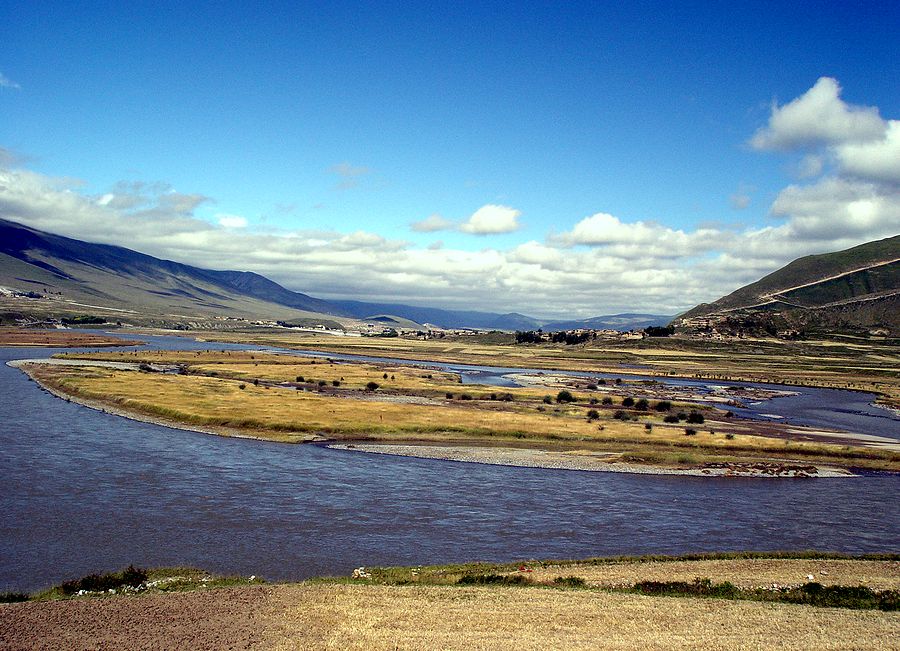
Zhaqu River in Qinghai and Tibet
Zhaqu River (扎曲河) is a tributary in the upper reaches of the Yalong River (雅砻江), located in Zhake Township (扎科乡), Ganzi County (甘孜县), within Ganzi Tibetan Autonomous Prefecture (甘孜藏族自治州), Sichuan Province (四川省). It lies about 80 kilometers from the county seat, at an elevation of 3,480 meters. The name “Zhaqu” comes from the Tibetan word meaning “Rock River,” as it flows through Zhake Township, which is also known as “Rock Valley.” The river stretches from Zhake Township to Geni Village (格尼村) in Xise Township (昔色乡), where it merges with the Chala River (查拉河).
This river valley features diverse landforms, combining both broad, calm stretches of water and narrow, steep gorges. With its dense reefs and rapid currents, certain sections have become popular rafting sites. The basin is rich in natural resources, producing cordyceps and fritillaria, while also serving as a habitat for wildlife such as bears, leopards, and deer. Seasonal landscapes vary dramatically: blooming flowers in spring, misty forests in summer, colorful foliage in autumn, and ice-crystal formations in winter. Waterfowl such as yellow ducks and mandarin ducks can often be spotted in the calmer areas.
With road access along the river, Zhaqu River has become a destination that balances ecological protection with tourism development. About 15 kilometers away in Maiyulong Village (麦玉龙村), visitors can find a naturally formed one-meter-high statue of Guru Padmasambhava, depicted in a seated meditation posture, which draws cultural and spiritual travelers.
Name and Meaning
The word “Zhake” (扎科) in Tibetan means “Rock Valley.” The section of the Yalong River flowing from Zhake to Geni Village in Xise Township, where it joins the Chala River, is called “Zhaqu,” meaning “Rock River.”
Natural Resources
The banks of the Zhaqu River are extremely rich in resources. Rare herbs such as cordyceps and fritillaria are abundant, and the region is also home to rare wildlife including bears, leopards, deer, and pheasants. With lush forests and dramatic river scenery, the valley is a paradise for both ecological conservation and adventure tourism.
Scenic Features
The Zhaqu River valley offers distinctive scenery through all four seasons.
- Spring and Summer: Verdant forests, ancient cypress and pine, blooming flowers, and fragrant valleys, with mountain mists creating an ethereal atmosphere. The crystal-clear river reflects schools of fish, resembling a dreamlike landscape.
- Autumn: Vast expanses of forest and shrubs blaze with red and golden hues, creating a breathtaking “painted forest” effect.
- Winter: Trees and shrubs are adorned with delicate ice blossoms that sparkle like pearls, while the entire gorge transforms into a silver wonderland of snow and ice.
Varied Landforms
The Zhaqu River valley displays striking geographical contrasts. At times the river widens into calm stretches where flocks of yellow ducks and mandarin ducks dance across the water. In other places, sheer cliffs rise skyward, the torrent rushes through rocky passages, and the roar of the river echoes thunderously through the gorge. Brave adventurers often attempt rafting expeditions here, navigating the surging waves and treacherous boulders.
Cultural Relic
About 15 kilometers from the Zhaqu River lies a remarkable natural statue of Guru Padmasambhava in Maiyulong Village (麦玉龙村). This one-meter-high stone figure, naturally shaped in a seated lotus posture, is regarded as a sacred and mysterious relic that attracts pilgrims and visitors alike.
Travel Tips
- Best Time to Visit: Spring and autumn are ideal, offering colorful blooms and golden forests. Winter is recommended for snow and ice scenery enthusiasts.
- Activities: Rafting, trekking, wildlife observation, and cultural exploration.
- Altitude Considerations: At 3,480 meters above sea level, visitors should be mindful of altitude sickness and acclimate gradually.
- Local Culture: Respect Tibetan customs when visiting villages or sacred sites.
- Accessibility: Roads along the river provide convenient access, but conditions may vary by season—check in advance.