Dajinsi Monastery in Garze County, Garze
Dajin Temple (大金寺), known in Tibetan as “The Prosperous and Auspicious Land,” belongs to the Gelug (格鲁派, Yellow Sect) of Tibetan Buddhism. It is located in Kagong Township (卡攻乡), Ganzi County (甘孜县), Sichuan Province (四川省). The temple was founded in 1662 by Ngawang Phuntsok (昂翁彭措), a disciple of the 5th Dalai Lama, and is one of the thirteen major Gelug monasteries of the Hor region (霍尔地区).
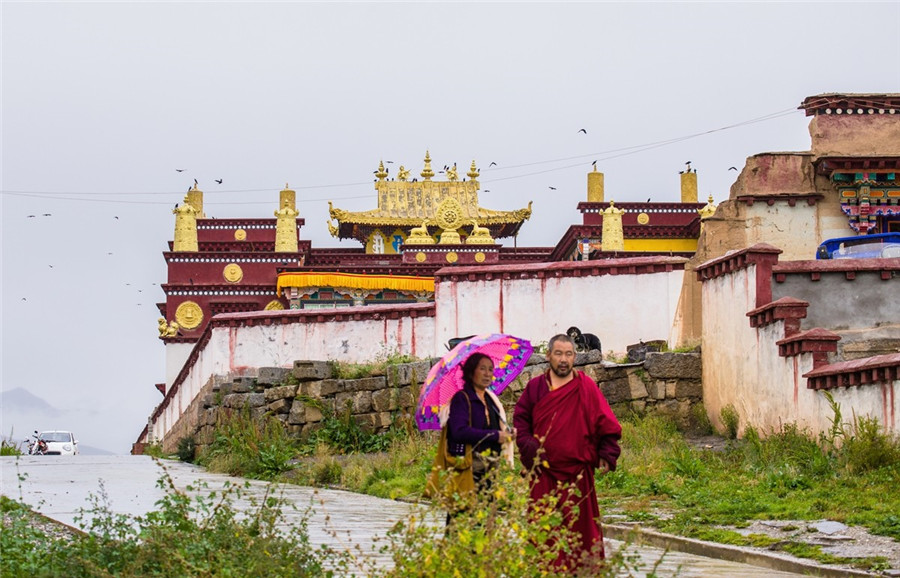
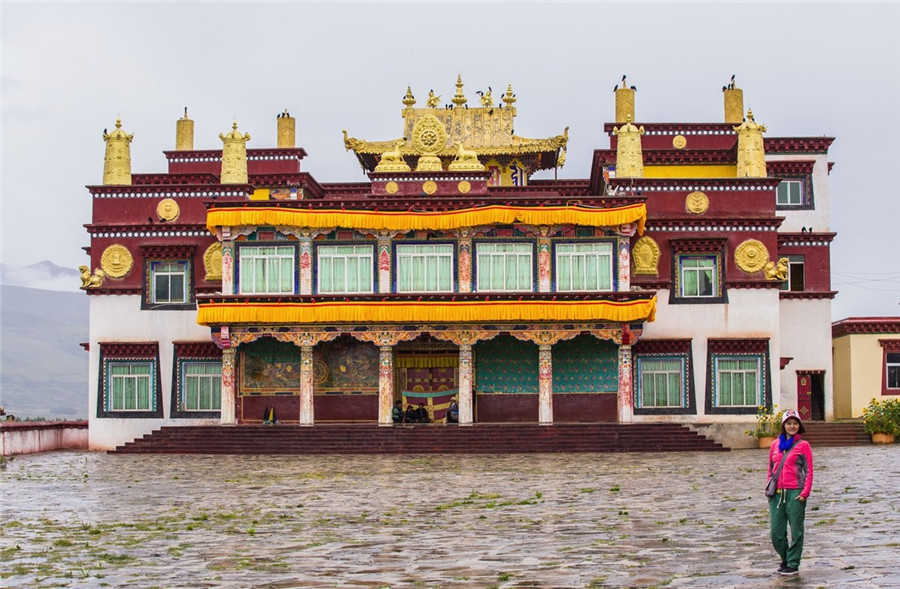
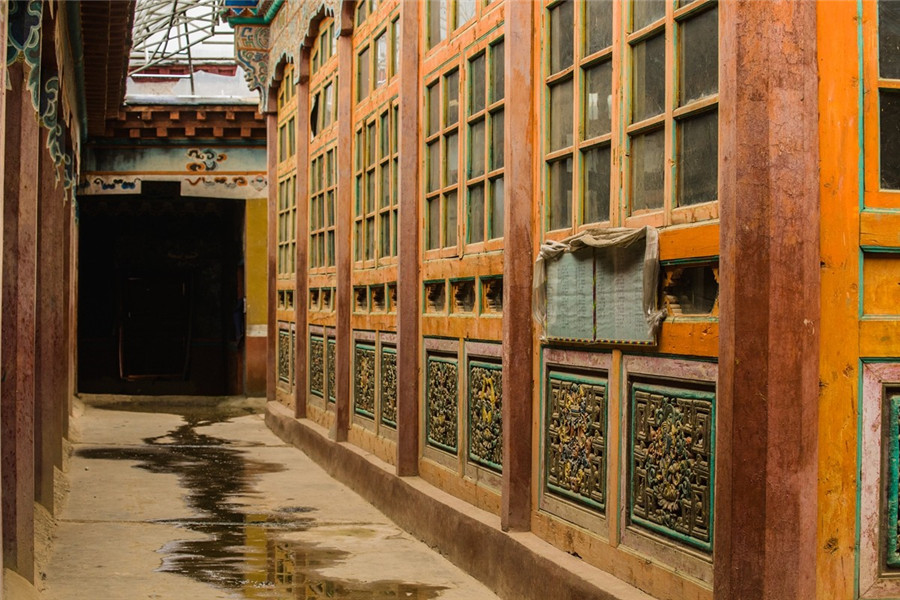
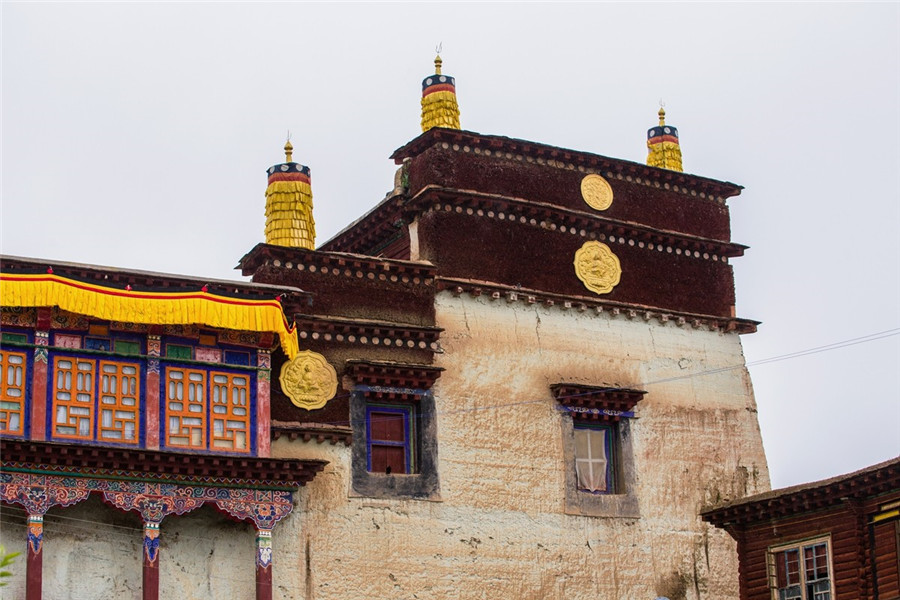
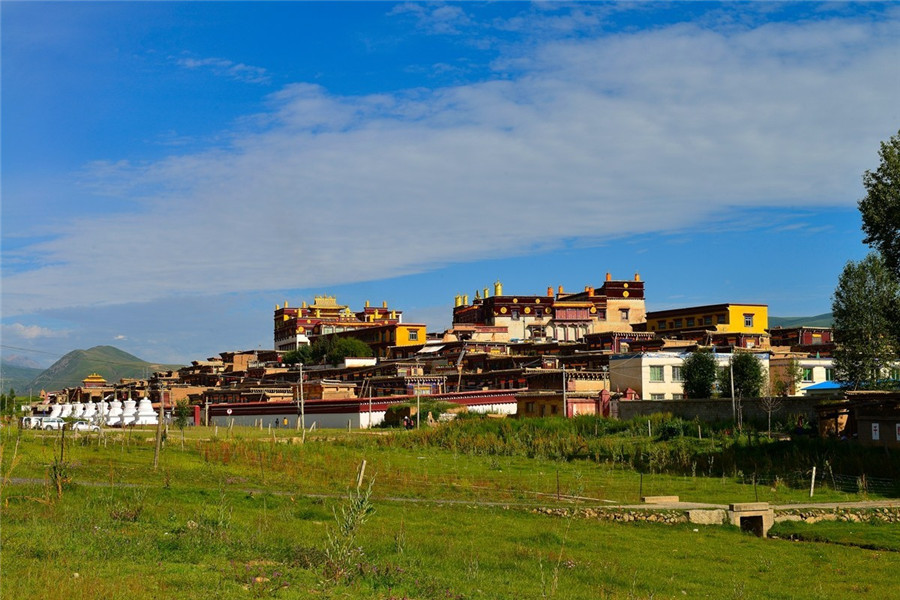
The temple is built against a hillside, with its main hall modeled after Jokhang Temple (大昭寺) in Lhasa (拉萨). Its architecture blends Tibetan and Han Chinese styles, with many of the existing structures rebuilt after the 1980s while retaining traditional religious functions.
Historically, Dajin Temple was originally located in Dagenong Valley (达格弄山沟) before being relocated to its current site due to a legendary omen involving prayer beads carried by a bird. At its peak, the temple housed more than 3,000 monks and established commercial networks extending to Kangding (康定) and Lhasa (拉萨).
Architectural Features
- Layout: Built on a hill, facing south, with an overall area of 148,000 square meters.
- Main Hall: Three stories above ground, inspired by Jokhang Temple, combining Tibetan decorative motifs with Han construction techniques.
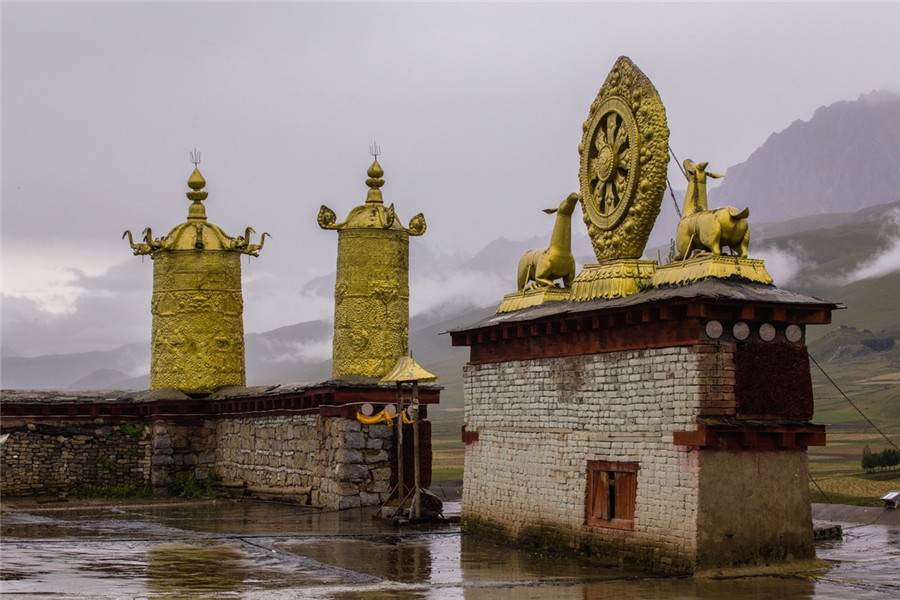
- Statues: Houses large statues of Shakyamuni (释迦牟尼), Tsongkhapa (宗喀巴), and Atisha (阿底峡).
- Style: Red-and-white color scheme, resembling a palace-like religious complex.
Historical Significance
Dajin Temple is one of the Hor Thirteen Gelug Monasteries (霍尔十三大寺). During the Qing Dynasty, it was renowned for its monk militia and immense wealth, with commercial capital estimated at 1–5 million silver dollars. Monks conducted trade across Ganzi (甘孜), Chamdo (昌都), Kangding (康定), and Lhasa (拉萨).
In 1931, the temple was involved in the “Great White Dispute” (大白之争), a conflict with Baili Temple (白利寺). Historical figures such as Marshal Zhu De (朱德) visited the site, and his photograph with the Baili Temple lama remains preserved.
Festivals and Activities
- June: Pilgrimage around the sacred mountain nearby, resembling King Gesar’s helmet.
- July–August: “Shaba Festival” (耍坝子), featuring Tibetan opera, horse racing, singing, and traditional dances like Guozhuang (锅庄, a Tibetan circle dance similar to tap dancing).
- Monastic Discipline: As a Gelug temple, strict monastic rules are enforced; monks require approval to leave, and gates are locked at night.
Travel Tips
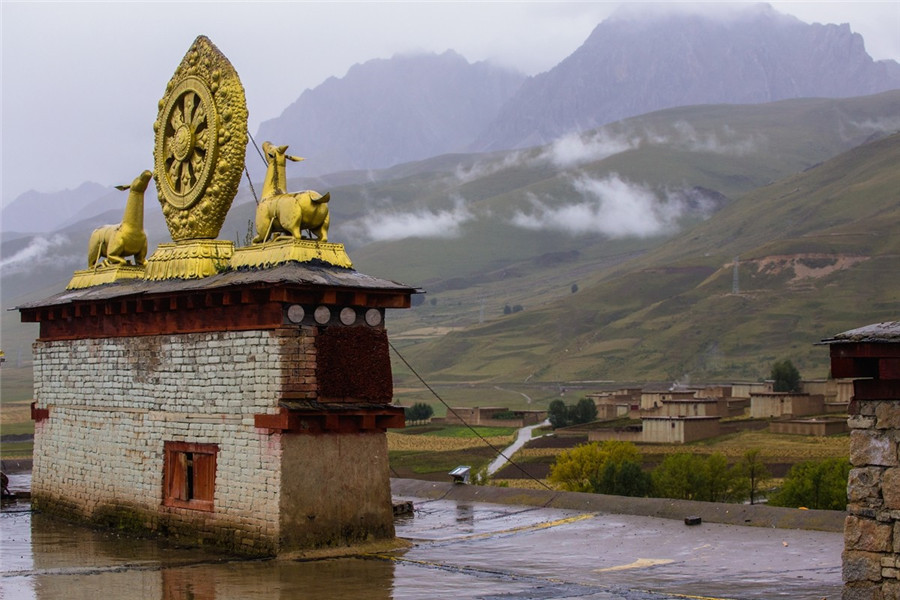
- Location: About 28 km from Ganzi County town center, near the Sichuan-Tibet Highway (川藏公路), with the Yalong River (雅砻江) flowing behind the temple and views of Mount Ri’ala (日阿拉雪山).
- Best Time to Visit: July and August for the Shaba Festival, or June for pilgrimage activities.
- Photography: The contrast of the red-and-white temple structures with snow mountains makes for excellent photos.
- Etiquette: Respect monastic rules, dress modestly, and avoid disturbing religious activities.
- Transport: Local buses and chartered vehicles are available from Ganzi County. Roads may be winding; allow extra travel time.