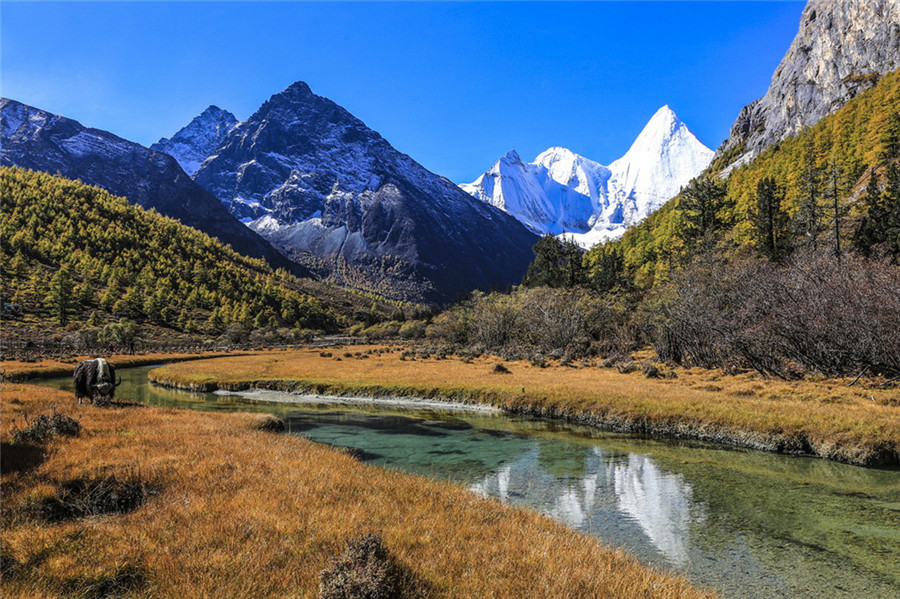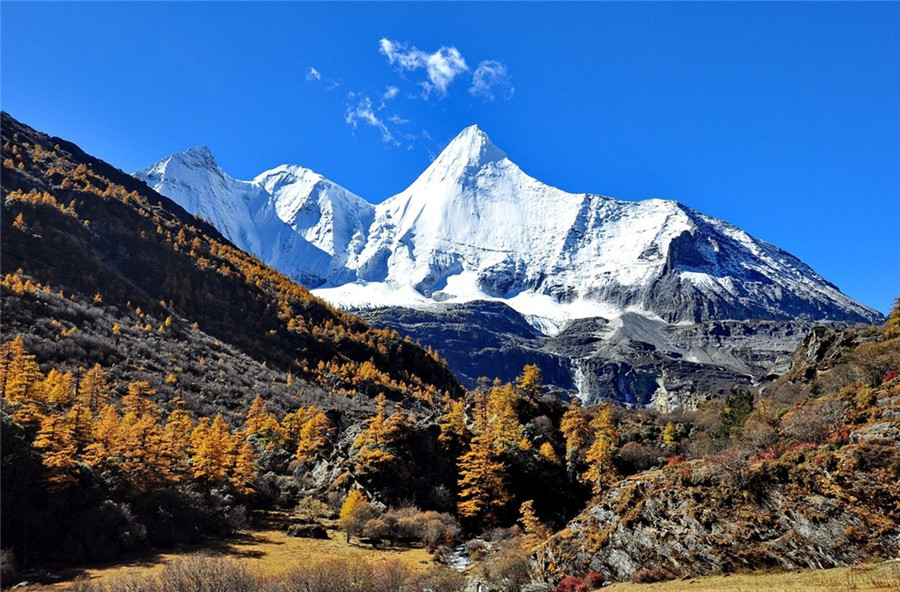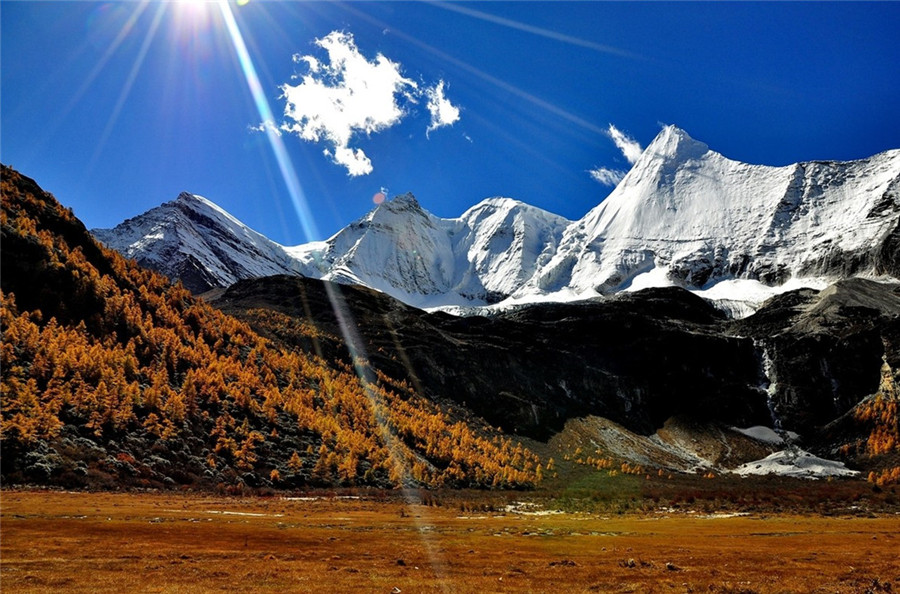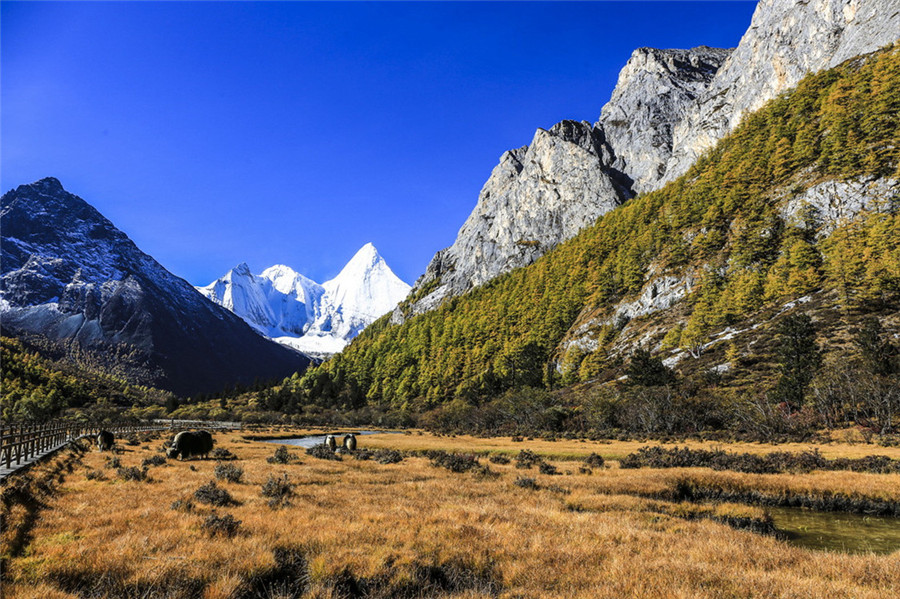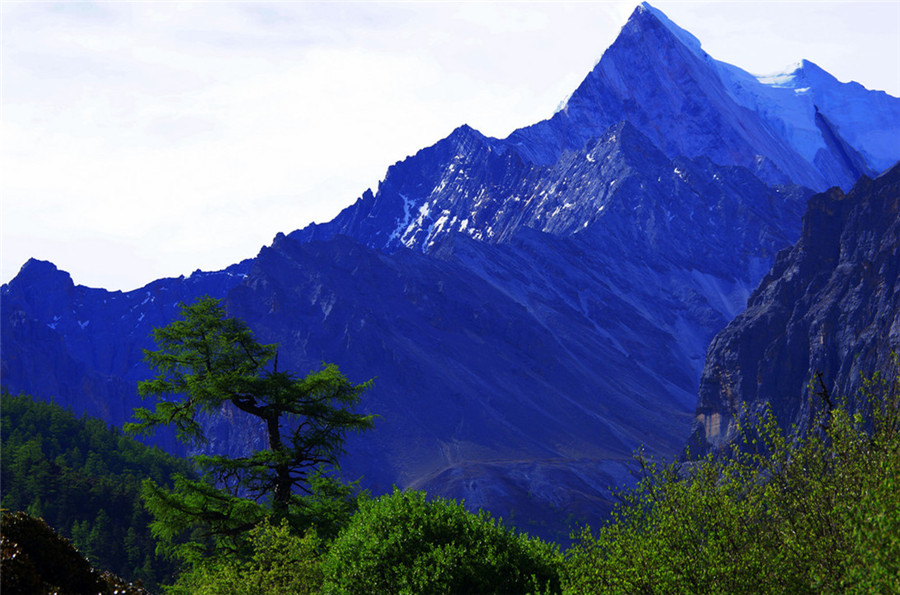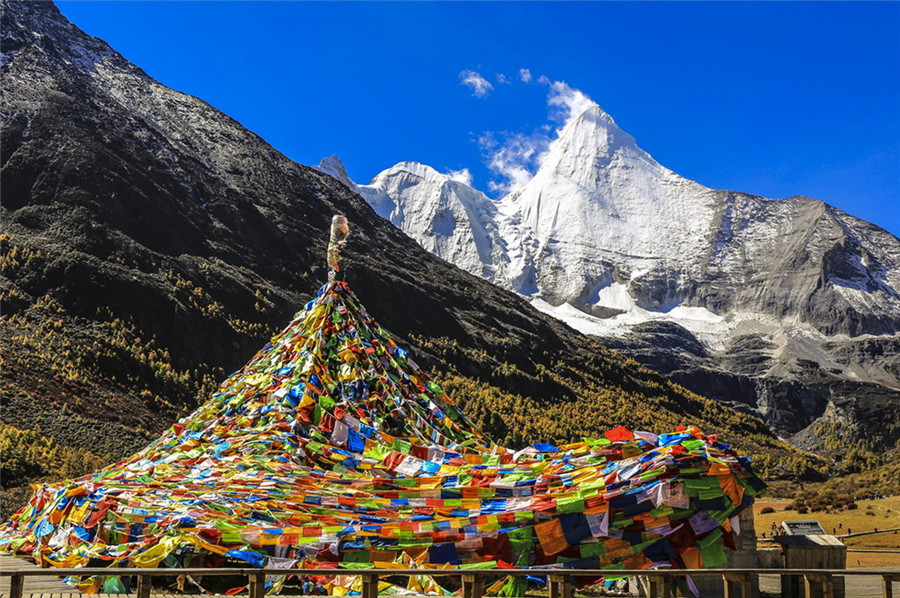
Jampelyang Mountain of Yading Nature Reserve in Daocheng County, Garze

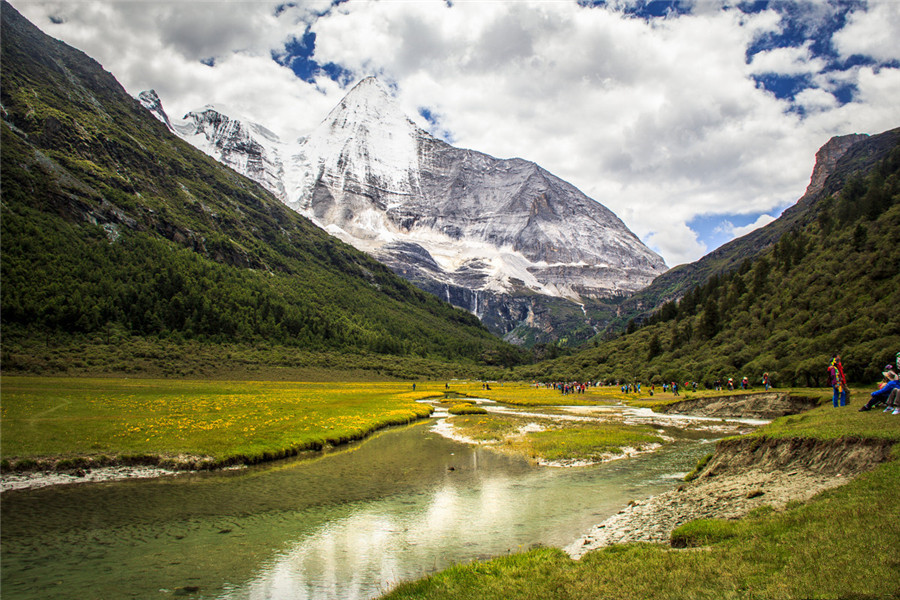
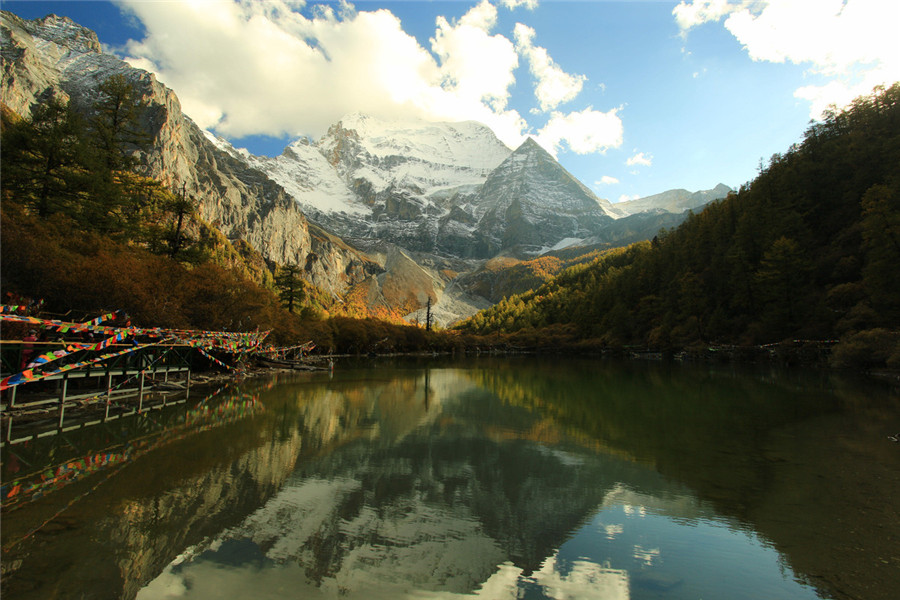
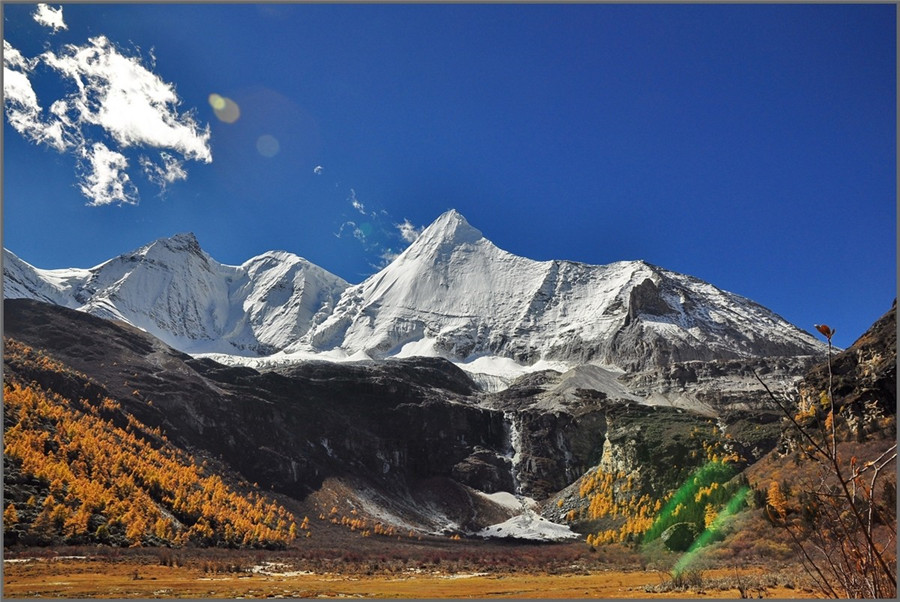
Jampelyang Mountain (央迈勇), part of the Yading Nature Reserve (稻城亚丁自然保护区), is the southern peak of the Three Holy Mountains (三怙主雪山). Rising to an elevation of 6,033 meters (as of 2023) (海拔6033米), Jampelyang is considered the highest and most sacred among the Three Holy Mountains, holding deep cultural and religious significance in Tibetan Buddhism. Jampelyang is also known as Manjushri (文殊菩萨), the Bodhisattva of Wisdom. In Buddhist tradition, Jampelyang symbolizes wisdom, with the mountain’s towering peak resembling the pointed wisdom sword held by Manjushri. The snow-covered peaks of Jampelyang stand proudly against the vast sky, creating a serene and sacred atmosphere.

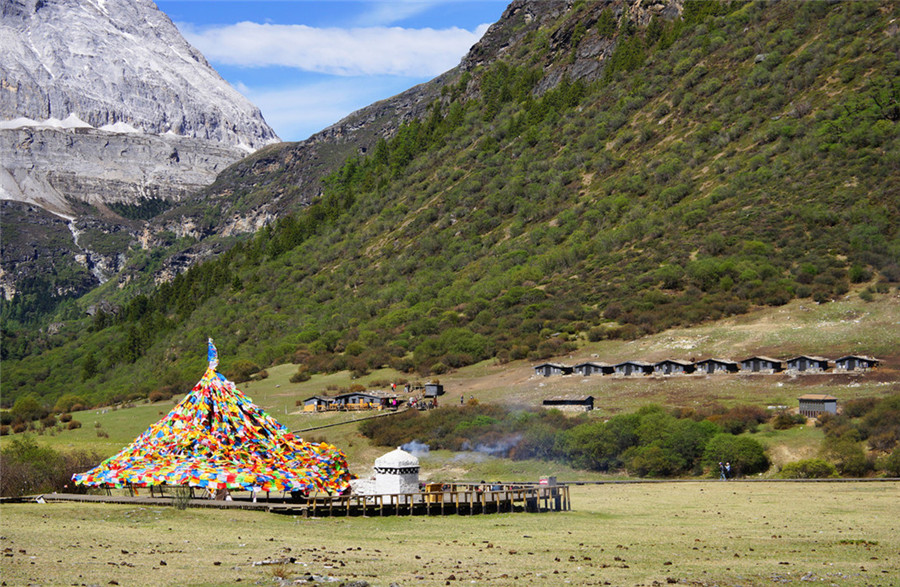
Located on the border between Muli Tibetan Autonomous County (木里藏族自治县) in Liangshan Prefecture (凉山州) and Daocheng County (稻城县) in Garze Tibetan Autonomous Prefecture (甘孜州), Jampelyang stands as a key landmark in the Yading Nature Reserve, offering breathtaking views of the pristine landscape and a rich cultural experience for visitors. The snow-capped mountain, surrounded by lush valleys, rivers, and forests, epitomizes the beauty and spirituality of Tibet.

Geographical Location

Jampelyang is located in the Yading Nature Reserve, a part of Daocheng County (稻城县) in Garze Tibetan Autonomous Prefecture (甘孜州), Sichuan Province. The peak rises to 6,033 meters (6033.0 m), making it the tallest of the Three Holy Mountains, surpassing the other two peaks, Xian Nari (仙乃日) at 5,998 meters and Xian Nori (夏诺多吉) at 5,951 meters.

The sacred mountain forms part of the Three Holy Mountains range, which holds significant religious importance for Tibetan Buddhists. These mountains represent the three great Bodhisattvas of Tibetan Buddhism: Manjushri (文殊菩萨) for Jampelyang, Avalokiteshvara (观世音菩萨) for Xian Nari, and Vajrapani (金刚手菩萨) for Xian Nori. Together, these peaks are central to the spiritual life of the Tibetan people, especially those in the Yading (亚丁) region.

Scenic Features

Sacred Water of Quejiong Zagang

Quejiong Zagang (却窘扎岗), a holy site, is located near Jampelyang. It is believed that the sacred waters here cleanse the soul, purifying one’s mind and spirit, allowing visitors to leave behind worldly worries and embrace purity. The water is considered to have healing powers, making it an important stop for pilgrims and visitors seeking spiritual renewal.

Sacred Rocks and Cliffs

Shesheng Cliff (舍身崖), known for its breathtaking beauty, stands at the edge of a steep precipice. Its massive scale and dramatic appearance make it one of the most striking features of the mountain. Visitors often stop at the nearby slope to rest, taking in the grandeur of the cliff and the surrounding natural beauty.

The Sacred Lakes

Erong Cuo (Milk Lake) (俄绒措), a glacial lake, is renowned for its crystal-clear blue waters and stunning surroundings. It is believed to have the power to heal ailments such as deafness and muteness. The lake, surrounded by snow-covered peaks, offers a serene and majestic atmosphere, making it a popular destination for pilgrims and nature lovers.

Wuse Hai (Five-Colored Sea) (五色海), located between Xian Nari and Jampelyang, is a high-altitude lake at 4,600 meters above sea level. The lake’s surface displays five distinct colors due to the refraction of light, earning it the name “Five-Colored Sea.” It is one of the most photographed spots in the region, with its mystical colors and stunning natural setting.

Lexi Cuo (Risheng Lake) (勒西措), situated on the western slope of Jampelyang, is the largest high-altitude lake in the reserve, covering 7 hectares. The lake’s verdant waters and the surrounding grasslands create a peaceful and picturesque landscape, particularly during the summer months when wildflowers bloom.

Liuli Hai (Glass Lake) (琉璃海) is another beautiful glacial lake, located to the east of the Five-Colored Sea. The lake is known for its striking glass-like appearance under sunlight, with its crystal-clear waters shimmering in the light. Due to its remote location, it remains less crowded than other lakes in the area.

Cultural Significance

Jampelyang is part of the sacred Three Holy Mountains (三怙主雪山) and holds a special place in the hearts of the Tibetan people. According to local legend, pilgrims who complete the full circuit of the three mountains will have their wishes fulfilled. The Three Holy Mountains are considered the spiritual protectors of the Yading (亚丁) region, and their presence is a source of strength and inspiration for the local Tibetans.

These mountains have been revered for centuries, and in the 8th century, the great Padmasambhava (莲花生大师) is said to have consecrated the peaks, dedicating them to Avalokiteshvara, Manjushri, and Vajrapani. Today, these mountains are not only a pilgrimage site for Tibetans but also a popular destination for tourists seeking to connect with the natural beauty and spiritual power of the region.

Travel Information

Recommended Visiting Time

  • Duration: A visit to Jampelyang can take approximately 3 hours.

  • Opening Hours: The area is open from 7:00 AM to 6:30 PM. After this time, no more tickets are sold, and entry to the area is prohibited.

  • Entrance Fee: There is no specific entrance fee for Jampelyang. However, it is included in the Yading Nature Reserve (亚丁自然保护区) ticket, which costs 150 CNY.

Best Time to Visit

The ideal time to visit is during the autumn months (September to October) when the landscape is particularly striking, with the crisp air and the colorful fall foliage. The spring and summer months also offer beautiful views, with lush green meadows and clear skies.

Mountaineering Tips

  • Fitness and Preparation: Climbing in the high-altitude region of Yading (亚丁) is a physical challenge, so it’s essential to be well-prepared. Visitors should carry light equipment and prepare for varying weather conditions.

  • Guided Tours: It is mandatory for visitors to hike with a guide. The local Tibetan guides (藏民导游) are experienced and can make the journey easier and safer. Solo hiking is not permitted for safety reasons, and visitors should always hike with a group.

  • Sacred Lakes: The Five-Colored Sea (五色海) and Milk Lake (牛奶海) are must-see destinations along the hiking route. The serene beauty of these lakes, combined with the towering snow peaks, creates a truly magical experience.

  • Travel with Respect: Jampelyang is a sacred site, and visitors should be respectful of local customs and traditions. It is customary to refrain from washing your face during your pilgrimage, as it is believed to be disrespectful to the sacred waters.