Princess Wencheng Temple in Yushu City
The Princess Wencheng Temple (文成公主庙), also known as Nampar Nangzed Lhakhang (那巴里囊则拉康), is located in Bainagou (贝纳沟), to the south of Jieshi Township (结石乡), in the Yushu Tibetan Autonomous Prefecture (玉树藏族自治州) of Qinghai Province (青海省). This temple holds great historical and cultural significance as it marks the place where Princess Wencheng (文成公主) spent the longest period during her journey to Tibet in 641 AD, when she married Songtsen Gampo (松赞干布), the King of Tibet.
History of Princess Wencheng Temple
This temple, which has a history of over 1,300 years, was built during the Tang Dynasty (唐朝). It was constructed after Princess Wencheng’s departure to Lhasa (拉萨) to honor her memory. The temple was created as a symbol of the friendship between the Tibetan and Han peoples and is now a protected cultural relic at both the provincial and national levels.
The temple is located at an altitude of 3,700 meters, making it not only the most significant historical site related to Princess Wencheng’s journey but also one of the most precious cultural relics in Tibet.
Cultural and Religious Significance
Princess Wencheng was highly revered by the Tibetan people, and after she left for Lhasa, statues based on her likeness were constructed to honor her legacy. This act of commemoration led to the building of the temple, which is a significant part of Tibetan Buddhism.
The Buddha Hall (大日如来佛堂) at the temple, also referred to as the Tathagata Temple (Tathagata Tamble), is especially important due to the numerous Buddhist sculptures and inscriptions found throughout the temple grounds. These inscriptions are written in Tibetan, Sanskrit, and Chinese, and they chronicle both the history of the temple and the cultural connections between Tibet and China.
The Buddha Sculptures and Inscriptions
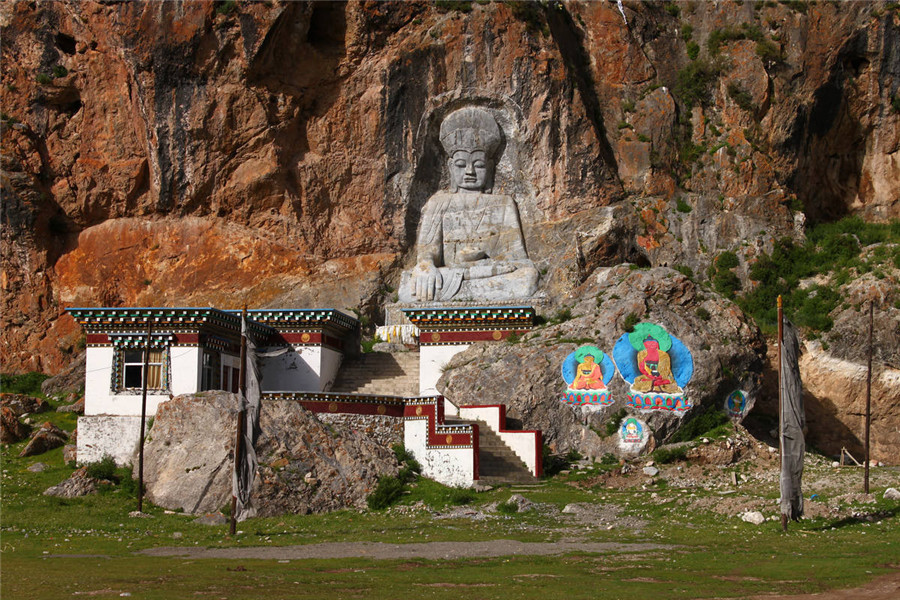
Legend has it that during her journey to Tibet, Princess Wencheng ordered artisans to carve nine Buddhist statues into the Danma Rock Cliff (丹玛岩) at this location. These statues include the Vairocana Buddha (大日如来), surrounded by eight other Bodhisattvas. The main Buddha statue, which is about 5 meters tall, is depicted in Chinese-style robes and seated on a lotus throne.
The statues were originally carved by the artisans Ren Nangze (仁囊泽), Jiesang (杰桑), and Huadan (华旦) and were later restored several times, including in 710 AD when Princess Jincheng (金城公主), the wife of King Trisong Detsen (赤德祖赞), had the statues and temple restored due to the effects of wind and weather erosion.
Architectural Features
-
The Buddha statue at the temple is seated on a lotus throne, and surrounded by beautiful symbols such as the Bodhi tree, parasol, and flags, all of which contribute to the serenity and majesty of the space.
-
The temple also features ancient Tibetan script, Sanskrit inscriptions, and Chinese calligraphy, including the famous Six-Word Mantra (六字真言), emphasizing its deep spiritual significance.
Significance for National Unity
The Princess Wencheng Temple serves as a symbol of the longstanding friendship between the Han Chinese and Tibetan peoples. Over the centuries, it has been preserved as a cherished cultural site for both Tibetan Buddhists and the Han Chinese, representing a harmonious and shared history.
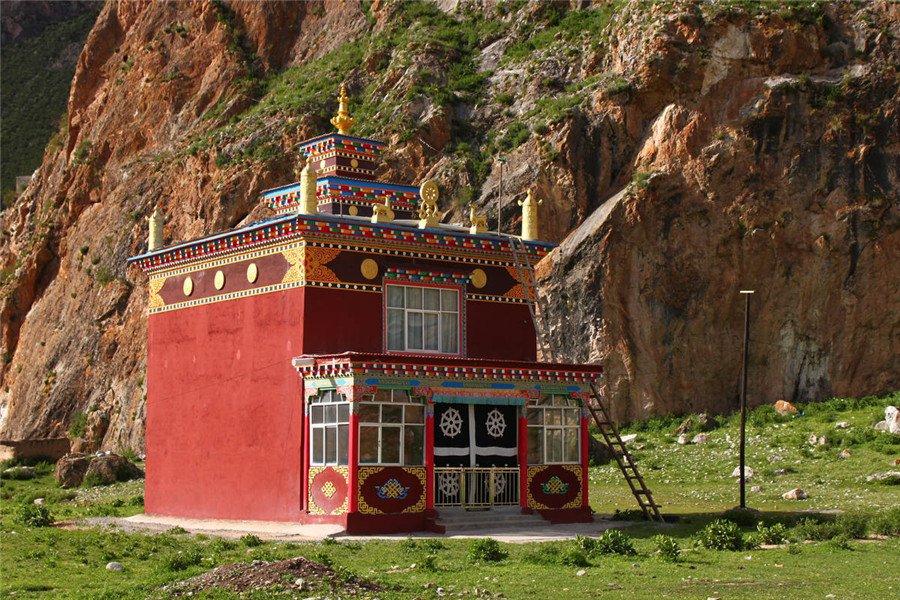
The temple complex consists of three main halls, and additional corridors have been built over time to protect and enhance the temple. These structures are decorated with vibrant paintings of Buddhist figures, making the temple even more striking. The temple walls are inscribed with ancient Tibetan characters, some of which have become difficult to read due to erosion.
Protection and Preservation
The Princess Wencheng Temple was designated as a key cultural relic protection site by the State Council of China on December 30, 1957. It remains a vital heritage site that showcases the rich history of both Tibetan and Han culture and is cherished by all who visit.
How to Visit
The temple is located about 20 kilometers from Jiegu Town (结古镇) in Yushu City (玉树市). Visitors to the temple can explore its historical significance, enjoy the serene atmosphere, and witness the grandeur of Tibetan Buddhist culture and art.
Surrounding Attractions:
-
Jiegu Monastery (结古寺) and Zhuomabangka Monastery (卓玛邦杂寺), which fall under the Drikung Kagyu (直贡噶举派) school of Tibetan Buddhism, also lie in close proximity to the temple, offering a broader experience of Tibetan Buddhist architecture and spiritual heritage.
The Princess Wencheng Temple stands as a testament to the rich cultural exchange between the Han Chinese and Tibetans, representing the deep spiritual and historical ties that have shaped the region for over a millennium. It is a place where the historical journey of Princess Wencheng meets the spiritual heritage of Tibet, making it a must-visit for travelers interested in Tibetan culture and history.