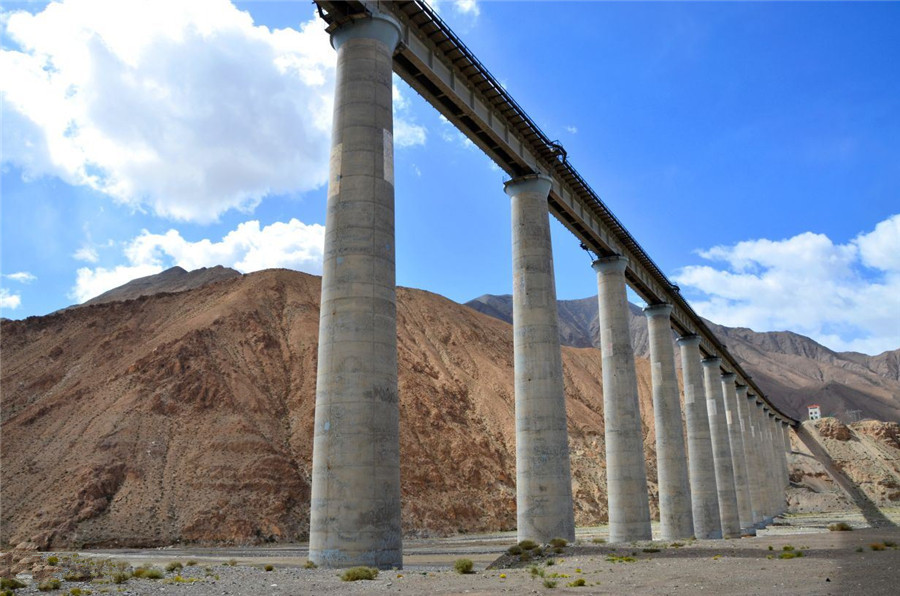
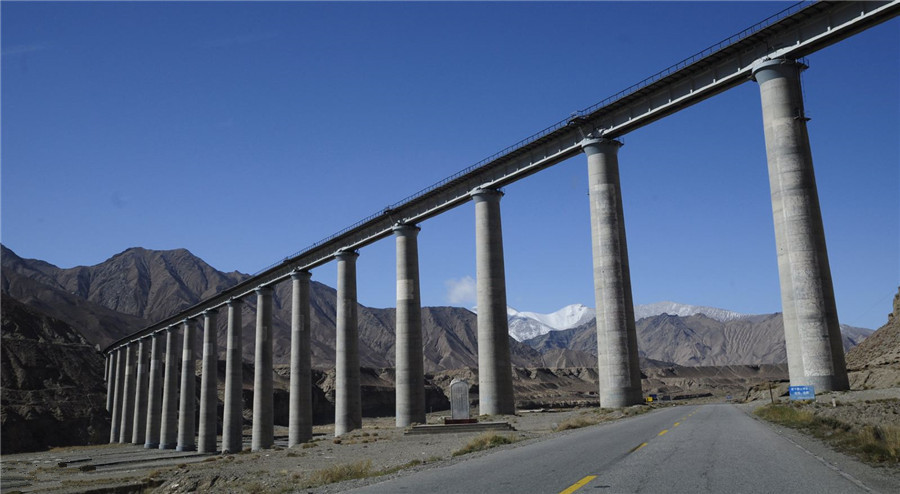
Sanchahe Bridge in Golmud
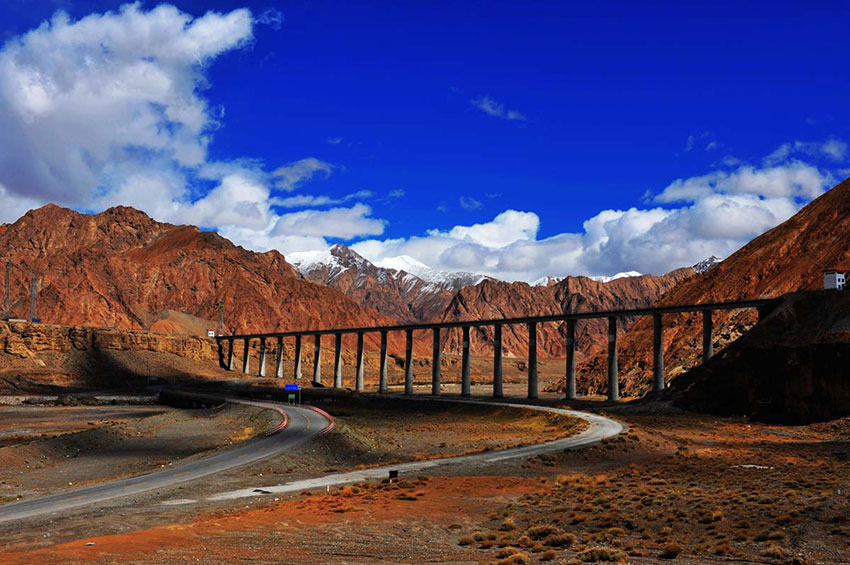
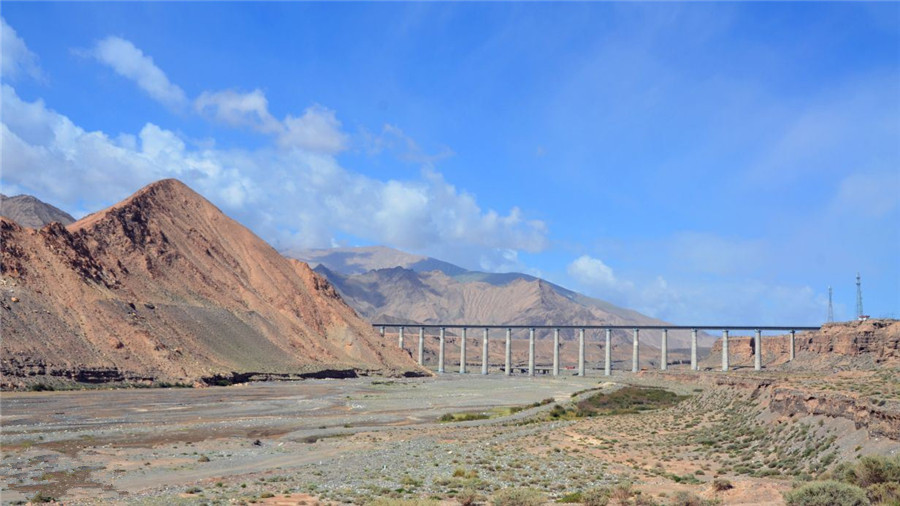
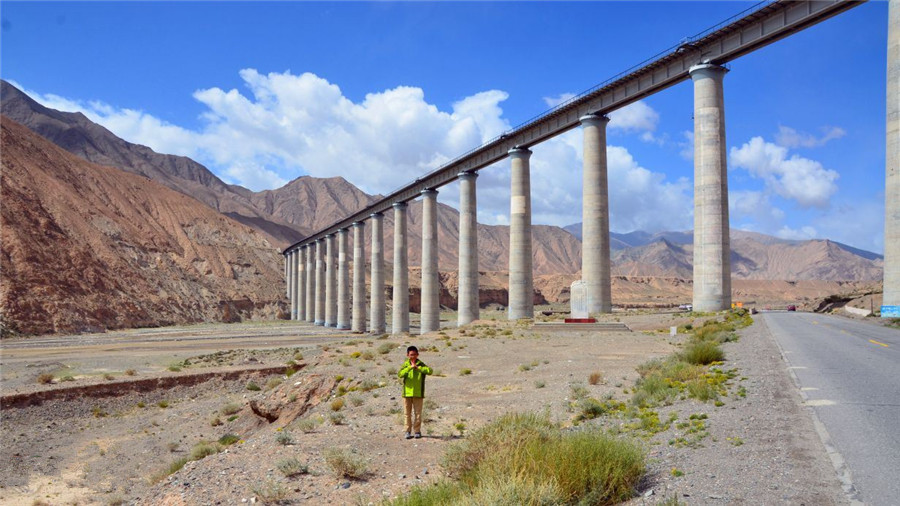
Sanchahe Bridge (三岔河大桥) is located in the Kunlun Mountains (昆仑山) at an altitude of over 3,800 meters (12,467 feet). It is the highest bridge on the Qinghai-Tibet Railway (青藏铁路) and an engineering marvel, with a total length of 690.19 meters (2,264 feet) and a deck height of 54.1 meters (177 feet) above the valley floor. Situated in a high-altitude mountain gorge, the Sanchahe Bridge is a key part of the railway’s challenging route through Tibet.
In recognition of its importance and technical achievements, the bridge is often referred to as the first super bridge (特大桥) on the Qinghai-Tibet Railway and was completed between August 22, 2001, and August 21, 2002.
Key Details
-
Location: Northern slope of Kunlun Mountain (昆仑山), near Golmud City (格尔木市), Qinghai Province (青海省)
-
Bridge Length: 690.19 meters (2,264 feet)
-
Height Above Ground: 54.1 meters (177 feet)
-
Construction Time: August 22, 2001 – August 21, 2002
-
Bridge Type: Continuous girder bridge with large span
-
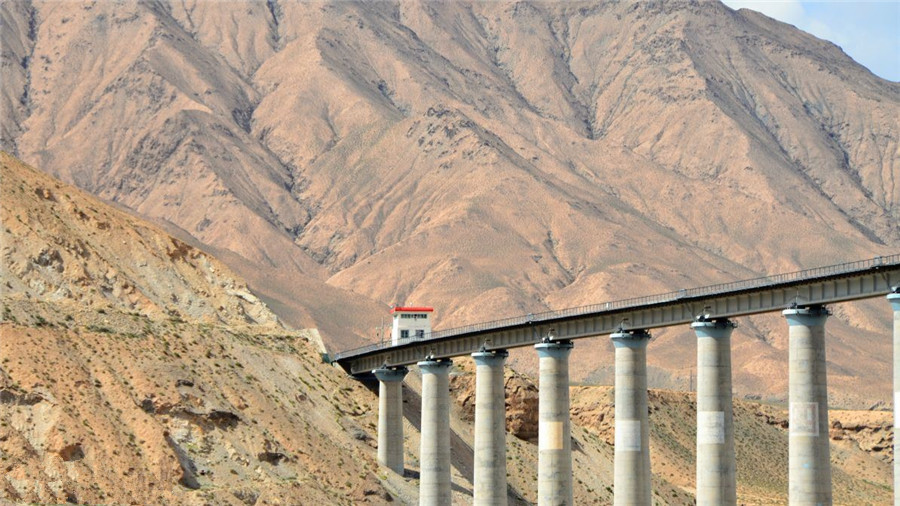
Key Features: 20 bridge piers, 17 of which are hollow thin-walled piers, with the thinnest wall being just 30 cm.
Design and Construction
Initial Design and Exploration
The initial design of the Sanchahe Bridge aimed to address the challenging geological and topographical conditions of the region. The proposed solution was a 230-meter main span continuous rigid structure. Finite element analysis was performed to assess the static, stability, and seismic behavior of the design. However, it was found that some issues still needed further study. Eventually, an improved design using external prestressed concrete was proposed, providing a solution suitable for the extreme conditions of the high-altitude environment.
Construction Challenges
Construction of the Sanchahe Bridge faced significant difficulties due to the extreme conditions of the Qinghai-Tibet Plateau (青藏高原). The region’s high altitude, low oxygen levels, intense winds, and strong ultraviolet radiation presented numerous challenges to the workers. Temperatures could drop to as low as -33.6°C (around -28.5°F) during winter.
Despite these hardships, the bridge was completed within a year, thanks to rapid decision-making, innovative engineering solutions, and precise scheduling. The construction team employed rotary drilling technology to bury 129 foundation piles into the frozen ground, minimizing damage to the delicate plateau ecosystem. The bridge also incorporated ecological protection measures, such as a passageway for migrating Tibetan antelopes (藏羚羊) beneath the bridge.
Overcoming Time and Weather Constraints
The bridge was a critical control point for the Qinghai-Tibet Railway, which connects Golmud (格尔木) to Lhasa (拉萨). The construction team had to meet stringent deadlines, with the foundation works starting in August 2001 and the main bridge completion set for July 2002. However, due to technical challenges and slow progress, experts initially predicted that the construction would take two years.
The project received attention from national leaders, including multiple visits from Zeng Peiyan (曾培炎), then Vice Premier of China, to inspect the progress. The bridge’s successful completion marked a significant milestone for the Qinghai-Tibet Railway, which is crucial for connecting Tibet to the rest of China.
Features and Scenic Value
The Sanchahe Bridge stands out as a symbol of engineering excellence on the Qinghai-Tibet Railway, crossing a deep mountain gorge surrounded by snow-capped peaks. The surrounding landscape features snowy mountains like Yuzhu Peak (玉珠峰) and vast desert-like plains, offering stunning views that are particularly breathtaking at sunrise and sunset.
-
Key Features:
-
Ecological Design: The bridge is designed to minimize ecological disruption, incorporating pathways for wildlife such as the Tibetan antelope and using techniques that preserve the natural environment.
-
Aesthetic Value: The bridge’s placement, spanning across a deep canyon, allows for dramatic views of the surrounding mountains, including Yuzhu Peak, and the expansive wilderness of the plateau.
-
Visitor Information
How to Get There
-
By Car: From Golmud City (格尔木市), take National Highway G109 (G109国道) south for about 94 kilometers to reach the bridge. You can also hire a car for approximately 400 RMB for a round-trip.
-
By Train: The Qinghai-Tibet Railway offers a panoramic view of the bridge as the train passes over it, providing an excellent opportunity to appreciate the grandeur of this engineering feat.
Opening Hours: The Sanchahe Bridge is open 24 hours a day and has no entrance fee.
Best Time to Visit: The ideal time to visit is between May and October, when the weather is stable, and visibility is high.
Altitude Considerations: The bridge is located at an altitude of over 3,800 meters (12,467 feet), so visitors should take precautions against altitude sickness. It’s advisable to bring an oxygen bottle and avoid strenuous physical activity.
Safety Tips: As the bridge is a railway-only structure, pedestrian access is strictly prohibited. Visitors should enjoy the view from designated viewing platforms.
Nearby Attractions
-
Kunlun Mountain Pass (昆仑山口): Located about 30 kilometers from the bridge, this pass is a significant landmark along the Qinghai-Tibet Highway (青藏公路) at an altitude of 4,767 meters (15,639 feet).
-
Wuji Longfeng Palace (无极龙凤宫): A Taoist temple located along the Kunlun Mountain route, offering a scenic stop on your journey.
-
Kekexili Nature Reserve (可可西里): Located further south, this protected area is home to the Tibetan antelope and other rare wildlife.