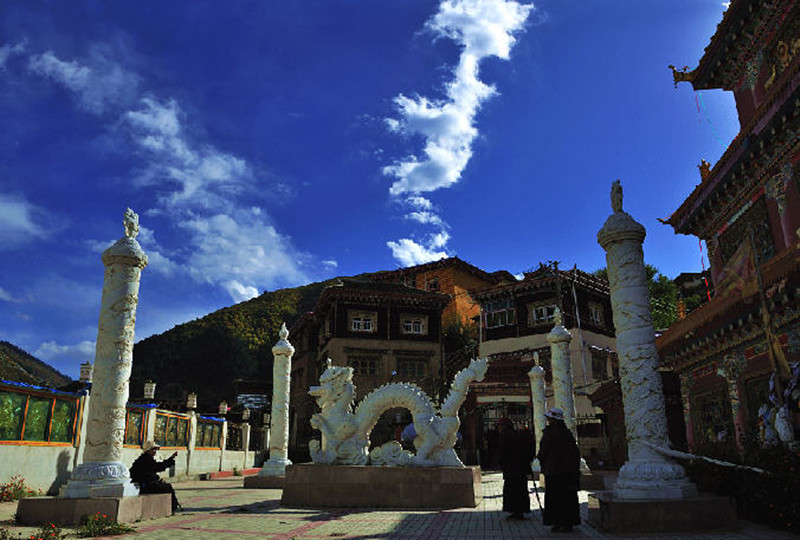
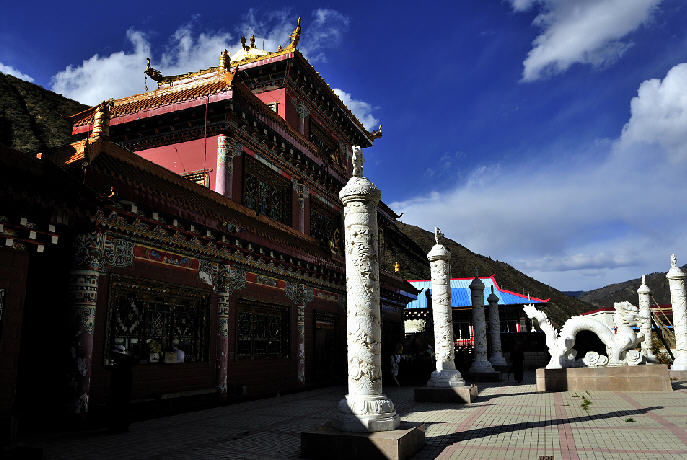
Zera Gompa Monastery in Xinlong County, Garze
Zera Gompa (则热寺), located in Xinlong County (新龙县), Garzê Tibetan Autonomous Prefecture (甘孜藏族自治州), is one of the largest and most significant Tibetan Buddhist monasteries in the region. Situated on the hillside behind Rulong Town (茹龙镇), the monastery is home to over 200 monks and is an important religious and cultural site in the area.
Overview of Zera Gompa Monastery
Historical Significance
Zera Gompa Monastery is part of the Nyingma Sect (宁玛派) of Tibetan Buddhism, known as the Red Hat Sect (红教). It is a branch of Baiyu Monastery (白玉寺) in Baiyü County (白玉县), and its exact founding date remains uncertain, though it is believed to have been established during the Qing Dynasty (清朝). The monastery primarily focuses on the transmission of Nyingma teachings and is known for its preservation of ancient Buddhist art, including murals and thangkas.
Key Features of Zera Gompa
Religious Importance
As a Nyingma Sect monastery, Zera Gompa holds a central place in the Red Hat religious network in the Kham region of Tibet. It shares its religious significance with other monasteries such as Baiyu Monastery (白玉寺) and Yawu Monastery (亚吾寺). The monastery plays a key role in local religious practices and is a hub for Vajrayana (Tantric) Buddhism.
-
Major Rituals: The monastery hosts regular religious ceremonies, including prayers for the Tibetan New Year (Lhosar) and the commemoration of Guru Rinpoche (莲花生大师纪念日), attracting many devotees to participate in these sacred events.
Architecture and Art
Zera Gompa’s architectural design is a unique fusion of Tibetan and Han Chinese styles, blending the cultural influences of both regions.
-
Main Hall: The central hall of the monastery houses a statue of Guru Rinpoche (莲花生大师), the revered teacher of Tibetan Buddhism.
-
Murals and Thangkas: The murals and thangkas (traditional Tibetan scroll paintings) inside the monastery primarily depict Buddhist Jataka tales (佛教本生故事), illustrating the stories of Buddha’s previous lives.
-
Cultural Relics: Zera Gompa also contains handwritten scriptures from the Qing Dynasty (清代) and gilded Buddha statues, some of which are protected as county-level cultural heritage.
Practical Information
How to Get There
Zera Gompa is located about 30 minutes by car from Xinlong County (新龙县) town. Some sections of the road are unpaved, so it is recommended to use an off-road vehicle for a smoother journey.
-
Best Time to Visit: The monastery is open daily from 8:00 AM to 6:00 PM. During religious ceremonies, opening hours may be extended. It’s advisable to consult local residents for any changes during special events.
Important Notes for Visitors
-
Respect Religious Customs: When visiting the monastery, it is customary to walk clockwise around the monastery while turning the prayer wheels.
-
Photography Restrictions: Photography is not allowed inside the main hall to preserve the sanctity of the religious space.
-
Altitude Awareness: Xinlong County has an average altitude of 3,500 meters, so visitors should be mindful of the cold weather and take necessary precautions for sun protection.
Nearby Attractions
Cuoka Lake (措卡湖)
Located 32 kilometers from Xinlong County, Cuoka Lake (措卡湖) features a central island housing Cuozong Gompa (措宗贡巴寺), another important Nyingma Sect monastery. This lake and its surrounding area make for a great extension of the visit to Zera Gompa.
Larima Grassland (拉日马草原)
In the summer months, the Larima Grassland has an average temperature of 20°C, making it a perfect summer retreat. The Zhazong Monastery (扎宗寺), also part of the Nyingma Sect, is located in this area, sharing cultural ties with Zera Gompa.
Why Visit Zera Gompa?
Zera Gompa, with its mysterious religious atmosphere and ancient Tibetan charm, offers a deep insight into Tibetan Buddhism and Kham culture. It is a lesser-known cultural gem in Xinlong County, ideal for cultural travelers who are looking to experience the spiritual and historical depth of Tibetan monasteries.