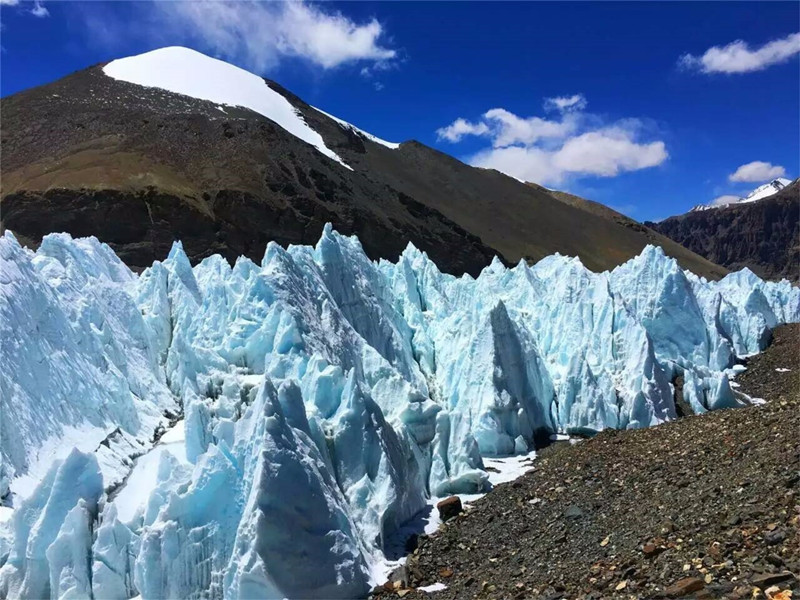
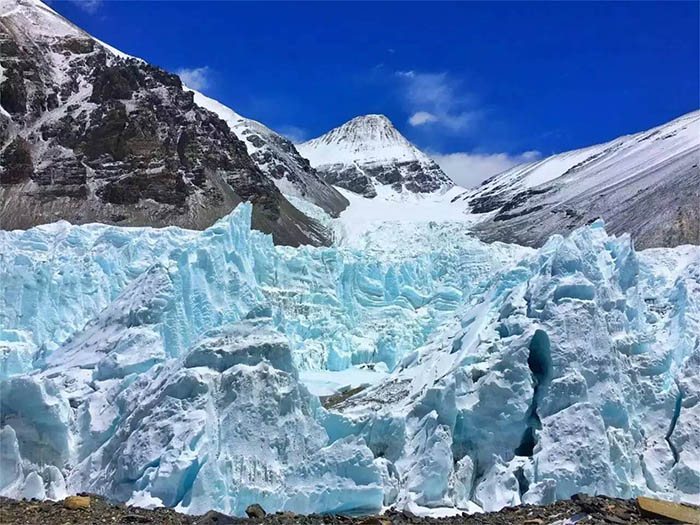
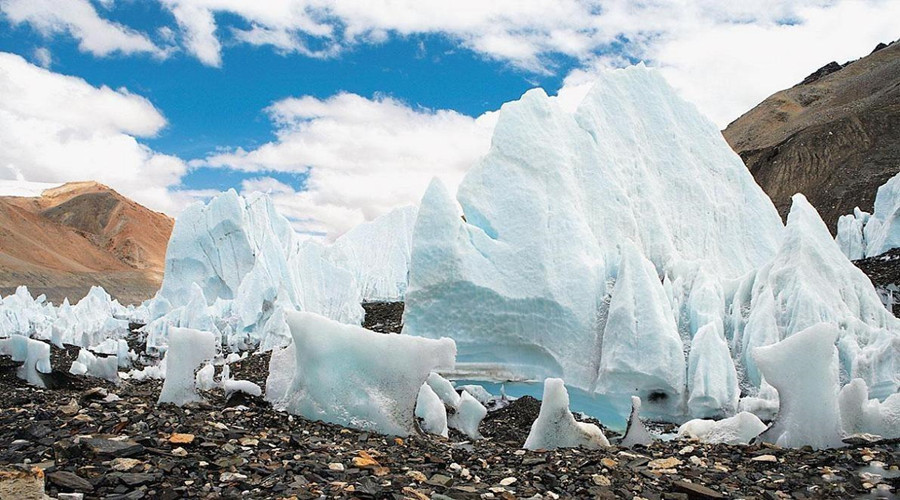
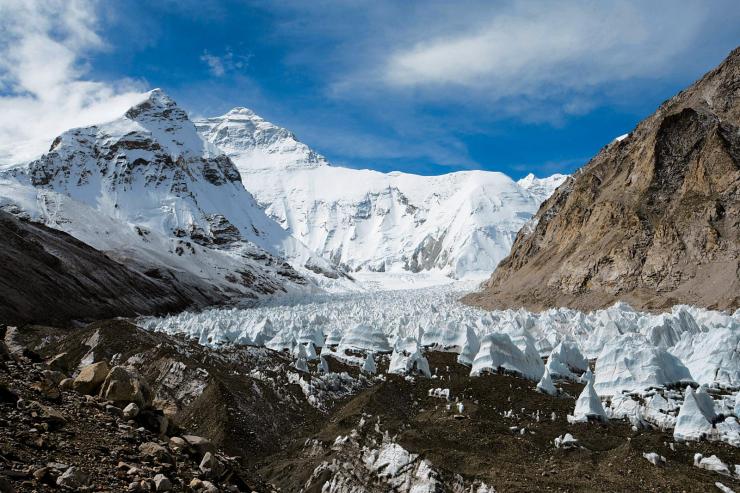
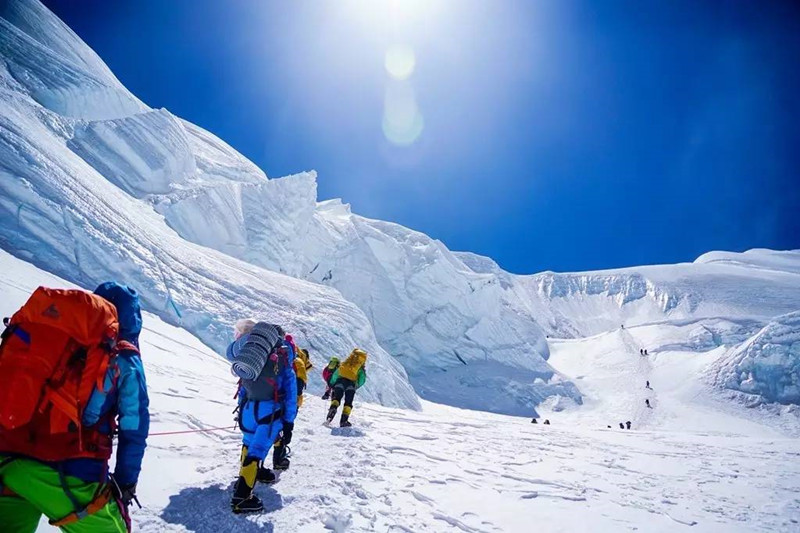
Rongbuk Valley of Mount Everest in Tingri County, Shigatse

Rongbuk River (绒布河) originates from the East Rongbuk Glacier (东绒布冰川), Middle Rongbuk Glacier (中绒布冰川), and West Rongbuk Glacier (西绒布冰川), all located on the northern slope of Mount Everest (珠穆朗玛峰). The river, which spans 129 kilometers, flows through Tingri County (定日县) in Shigatse (日喀则市), Tibet, passing through Zhashizong (扎西宗) and Qudang (曲当) villages, before ultimately joining the Pengqu River (朋曲河). The accelerated glacier melt due to climate warming has increased river runoff, peaking during the summer months. Thanks to effective ecological protection measures, the river’s water quality remains at class I standards.

The Rongbuk Valley is a glacial river valley located at an average altitude of around 4,000 meters and stretches in a north-south direction. It is surrounded by towering mountains on the southeast, southwest, and west sides, with elevation differences of more than 2,000 meters between the valley floor and the surrounding peaks.

Geographical Features

Geomorphological Wonders

  • The valley’s terrain features clear signs of tectonic activity, with evident compression folds in the mountains on both sides of the river. This serves as a direct witness to the geological transformations of the Qinghai-Tibet Plateau (青藏高原).

  • The yellow-brown mountain ridges contrast starkly with the lush green fields, while some areas have reddish rock layers shaped by weathering, resembling “Martian landscapes”.

Water System and Ecology

  • The Rongbuk River (扎嘎曲) is fed by the meltwater from the Rongbuk Glaciers. The river spans 129 kilometers and flows into the Pengqu River, which ultimately merges into the Ganges River system in Nepal.

  • The valley is crucial for local agriculture, providing water for the cultivation of crops. However, in recent years, the increase in glacial melt has heightened the risk of flooding, which has led to greater challenges for the local farming community.

Cultural and Tourism Highlights

Rongbuk Monastery (绒布寺)

  • Rongbuk Monastery, the highest monastery in the world at approximately 5,100 meters (16,732 feet), is located on the west side of the valley and is a prime spot for viewing the North Face of Mount Everest. Visitors to the monastery can experience the spiritual and cultural atmosphere that has been preserved for centuries at this extreme altitude.

Opening Hours and Best Time to Visit

  • Rongbuk Monastery is open year-round, with no entry fee required.

  • The best time to visit is between May and October, when the weather is relatively stable, and the region is free of heavy snowfall, making it easier for tourists to explore.

Accessibility

  • Route: From Tingri County (定日县), it takes about 70 kilometers (43 miles) to reach Rongbuk Valley via National Highway G318 (G318国道).

  • Altitude Considerations: The area’s high elevation requires visitors to be cautious of altitude sickness. It’s recommended to bring oxygen tanks and avoid strenuous physical activity when arriving at the valley.

  • Environmental Considerations: Visitors are encouraged to respect local customs, particularly the religious sites, and avoid littering.

Hydrological Changes

The Rongbuk River has seen an increase in water runoff due to the accelerated melting of glaciers, influenced by rising temperatures. In the last 50 years, the region’s temperature has significantly increased, leading to both glacial retreat and changes in river flow. The river reaches its peak flow from July to August, while freezing occurs from November to March. Recent observations, including a survey in the autumn of 2021, show that the water levels have significantly risen, following the broader trend of glacier retreat across the Tibetan Plateau.

Ecological Protection

Ecological protection measures have been implemented in the Rongbuk River Basin, including the enforcement of the River Chief System (河长制) and approximately 35 kilometers of river channel improvement projects. Since 2019, the Mount Everest National Nature Reserve (珠穆朗玛峰国家级自然保护区) has strengthened its environmental protection efforts, such as relocating base camp activities further from the Rongbuk Monastery to reduce human interference with the sensitive environment. Regular monitoring of glacial water systems and mountaineering waste removal ensures the water quality is maintained at class I standards.

Economic and Social Impact

The communities along the Rongbuk River include Bashong Village (巴松村) and Quzong Village (曲宗村), among others, where local residents rely on Mount Everest tourism for economic development. This has led to substantial improvements in infrastructure, including road repairs, communication networks, and the construction of homestays.

The Tingri County Water Resources Bureau (定日县水利局) has noted that the increased flow of the river has had a direct impact on agricultural irrigation and local drinking water supplies. Consequently, ongoing monitoring and adjustments are necessary to ensure sustainable water usage for local communities.

Nearby Attractions

Mount Everest Base Camp (珠穆朗玛峰大本营)

  • Located around 100 kilometers (62 miles) from Rongbuk Valley, the Everest Base Camp offers a closer look at Mount Everest’s North Face and is one of the primary access points for mountaineers attempting to summit the world’s highest peak. Visitors need to secure a border pass (边防证) in advance for access.

Rongbuk Glacier (绒布冰川)

  • Visitors can also explore the Rongbuk Glacier, a stunning landscape that can be reached by hiking. The ice tower formations (冰塔林) offer a unique view of the glacier and are a key feature of the region’s natural beauty.

Controversies and Corrections

Elevation Discrepancies

  • Some sources mistakenly list the elevation of Rongbuk Monastery as 4,980 meters (16,340 feet), though the actual elevation is closer to 5,100 meters (16,732 feet).

Name Confusion

  • Visitors should distinguish between Rongbuk Valley (绒布河谷) and Rongxia Valley (绒辖沟), which is another nearby gorge located southwest of Tingri County.